The post Looking Ahead: The Next Chapter for Sense appeared first on Sense.
]]>To everyone who installed a Sense monitor, explored their energy data, and made a few smart changes—thank you. You helped build what Sense is today, and you’re helping shape where we’re going next.
Today, we’re sharing an important update and a look at what’s ahead. We’ll stop selling the Sense Monitor by December 31, 2025. But, don’t worry – we are continuing to support and improve the Sense app and will continue to support existing Sense monitors.
In fact, the Sense app is now going to be available to a much larger set of customers. We are now embedding Sense directly into the next generation of smart meters and rolling out through utility partners across the country, and soon, around the world. These meters are expected to reach tens of millions of homes in the next few years.
This approach means no extra hardware, no installs, and more people getting energy insights that make a difference.
It wasn’t an easy decision to stop selling the hardware version of Sense. The Sense monitor is how many of you first discovered the power of real-time energy insights. It proved that better awareness could lead to better choices and real savings. But to make an even bigger impact, we are expanding to this much more scalable model.
Our mission has always been to make energy efficiency simple, actionable, and accessible to everyone.
A Change that opens doors
This focus on delivering the Sense experience through smart meters has a number of benefits.
More access to energy data for more people
Until now, using Sense meant buying a monitor and setting it up. But not every household has the means or interest to do that. With Sense built into smart meters, we’re breaking down those barriers.
Better tools for grid reliability
The grid is under pressure. With Sense in the meter, utilities can see energy trends in real time, helping them better manage demand, avoid outages, and plan smarter infrastructure upgrades.
Faster progress toward decarbonization
Clean energy is crucial, but using it wisely is just as important. Sense can help shift usage away from peak times, spot waste, and reduce unnecessary demand. These small choices, made at scale, can significantly lower carbon emissions across entire communities.
If you own a Sense Monitor, you’re still at the center of the experience.
This update is about expanding access, but it doesn’t change our commitment to you.
No matter how you connect to Sense, monitor or smart meter, the app stays at the heart of the experience.
We’re building new features to help you use energy more efficiently, manage costs, and understand the impact of your choices. Every update is designed to help you do more with the energy you already use.
If you have a Sense monitor, you’ll continue to get:
- App and firmware updates
- Ongoing device detection improvements
- Energy data access
- Security patches
- Dedicated customer support
Thank you for being part of the journey.
To our customers, partners, and supporters – you’ve helped Sense grow from an idea into a meaningful contributor to solving our world’s energy challenges. This next chapter is all about reaching more people, faster, and creating a more resilient and reliable grid for all of us.
We’re grateful for your support, and we’re excited to keep building what’s next, together.
The post Looking Ahead: The Next Chapter for Sense appeared first on Sense.
]]>The post A Letter From Sense CEO Mike Phillips appeared first on Sense.
]]>Until recently, the sort of real-time consumer experience provided by Sense could only be achieved through additional hardware in the home. But, we’ve always felt that we need the core infrastructure in homes to become smart. For us, that means building Sense into the electrical panel or electric meter (the two places in the home that you can have a complete picture of how energy is being used). We’ve been working on this for the past few years with Schneider Electric for building Sense into electrical panels and with Landis+Gyr on next generation smart meters for utilities.
Schneider announced their new smart panels as part of their Home Energy Management Solution at CES in January. The Schneider Pulse smart panel, powered in part by embedded technology from Sense, can be combined with a suite of Schneider solutions to bring greater automation to energy production, storage, measurement and control. The complete solution will roll out over the course of 2023.
In 2020, we announced a partnership with Landis+Gyr to embed Sense technology in their Revelo meters and have been hard at work with the team at Landis since then. These meters will begin to roll out to consumers’ homes this year – there are announced deployments with National Grid in New York and Massachusetts and with Otter Tail Power in Minnesota and North Dakota. With just these announced rollouts, Sense will be available in over 3 million homes. We feel this will establish a new benchmark for how utilities can provide real benefits to customers based on smart meters – this is the first time that utilities will provide a real-time mobile application experience without the need for additional hardware in the home.
I just returned from DistribuTECH 2023 where we announced a partnership with Itron for Sense running on their distributed intelligence (DI) platform. There is now broad acceptance in the industry that next generation utility meters can be the platform for a range of applications – both consumer facing and grid facing. Since starting Sense we’ve known that we need to move from legacy, one-way communication (where meters collect data and send to the utilities) to something more like the architecture of Sense – using network-connected edge computing to support a range of real-time applications. It is great to be working with the two leading providers of meters and associated platforms.
We’ve been growing our team here at Sense – now over 140 people. Part of our growth is to support our scale as we expand into millions of homes. We are also significantly increasing the size of our product, engineering, and data science teams to expand how we deliver actionable insights to our customers. These teams are hard at work on the next generation of the Sense Home application experience to support a broader range of consumers. With so many homes and users, our focus on the consumer experience will only increase. For all of you who are Sense users, thank you for your ongoing engagement — your feedback continues to be a major input into what we do here at Sense.
The post A Letter From Sense CEO Mike Phillips appeared first on Sense.
]]>The post 2021 Year End Update from Mike appeared first on Sense.
]]>After 2020 and all the challenges of the pandemic, this year felt like a return to normal in many ways. Here at Sense many of us were able to get back in the office and see each other again. We are finding a good mix of in-person and remote work—and all spending a lot of time on Zoom and Slack!
Our technical work moved ahead rapidly this year on a few different fronts. The data science team continues to make progress on device detection with some improvements already deployed and much more in the works. One area of development that I’m very excited about is how to increase the collaboration between the app and our users. We know the number one request from our users is “let me train Sense!” While there are technical reasons why we aren’t able to support exactly this, we are working on ways in which users can interact with Sense to improve the overall understanding of devices and activity in the home. We think this will have a big impact and are hard at work on it in both our data science team and our product team. Expect to hear more about this in the coming year.
We are also continuing to work on application functionality beyond just device detection— especially for the initial time period when Sense is still learning about the home. For example, you can learn more about the electricity from the grid with features like Power Quality, which shows fluctuations in your home’s power that could be a problem. We’ve had feedback from customers who’ve corrected serious issues after seeing their power quality fluctuate.
We know that many of our customers share our deep concern about climate change. Everything you do to reduce your home’s energy footprint with insights from the Sense Home app helps to slow carbon emissions. For instance, in most homes, devices that stay on continuously account for 23% of the utility bill. To help you track down those devices, we added Always On Device Estimates, with a list of hundreds of consumer electronics and their energy usage. If you use the estimates checklist, you may discover some devices to turn off. Collectively, we can make a big difference by getting rid of our energy vampires.
A sweeping change that’s taking place in home electricity is the shift to cleaner energy sources from the grid. Because of the increasing reliance on solar and wind, the carbon emissions to generate the power for your home can vary depending on the time of day. We added the Carbon Intensity feature to tell you when energy from the grid is cleanest (or not) so you can time your activities to reduce your carbon footprint. Eventually we believe that a feature like Carbon Intensity will be used with integrations and automation so you’ll be able to tell Sense to charge your EV or turn on your dishwasher when carbon emissions will be lowest.
This past summer there were record heat waves in the West and South. Many utilities are trying to control energy demand during those peak events with Time of Use billing. We expect that this is a trend that will continue, so we added support for Time of Use billing in the Sense Home app. With this new feature, the Sense Home app alerts you when an On-peak rate begins and tells you when it will end. It helps you plan activities like running a dishwasher, charging an electric vehicle or washing a load of laundry when off-peak pricing is lower. You’ll also help prevent rolling blackouts by being aware of peaks and adjusting your consumption.
Coming soon will be a feature called Top Movers and Peak Device Alerts. It gives you more details about the devices that are contributing the most to your energy usage so you’ll know where to focus your energy saving efforts.
When we founded the company back in 2013, our mission was to use technology to reduce global carbon emissions by making homes smart and efficient. Sense customers are playing a leading role in a shift to the electrification of homes and toward clean energy both from rooftop solar and the utility grid.
As the year comes to a close, we’re grateful to all our customers who have joined us in our journey toward a cleaner, more resilient future. Wishing you good holidays and a Happy New Year!
Mike Phillips is the CEO of Sense.
The post 2021 Year End Update from Mike appeared first on Sense.
]]>The post 2019 Year End Update from Mike appeared first on Sense.
]]>We’ve had another super busy year at Sense! We’ve been expanding our team, adding partnerships, and continuing to add key functionality to the Sense products. And of course, continuing to expand the device coverage of the core Sense technology (the number one thing most of you are asking for).
Last year I wrote about our focus group studies where we learned more about peoples’ desire to save energy in their homes — and the ways we could help. One of the things we did to follow up on this was to spend a lot of time with customers — including visits to their homes to better understand energy savings opportunities and how Sense could help (thank you to everyone who let us do this!)
One of our key findings was that there is actually a VERY broad set of energy wasting devices in homes. To see what I mean, take a look at the stories at Sense Saves. If we had found that there were just a handful of energy wasting devices in homes, our focus for the year would have been to identify those energy wasting devices and automatically alert consumers about them to get them replaced. For example, if we had found that old, inefficient refrigerators or incandescent lights were the main culprits (which seems to be the assumption of the utility efficiency experts I talk with) then we would automate the detection of inefficient refrigerators and incandescent lights and figure out ways to encourage users to replace them. But it turns out that the assumption that these few bad devices account for major efficiency gains is wrong! And yes, if you still have some old, inefficient refrigerator or still use incandescent lights, you should change that, but this is mostly done. Based on our data, if the remaining bad fridges were replaced with modern, efficient versions, we would see a savings of only about 1.8% and if the remaining incandescent lights were replaced with LEDs, we would save just over 0.8% of total power.
So, yes, we should do those things, but meanwhile there is a long tail of “energy hogs” — by which we mean a wide variety of things that the homeowner could easily fix or change if they knew about them. We think about half of these energy hogs are “Always On” devices which make up approximately 23% of all US residential electricity use. Some of these are things that use power for a reason (radon fan, network router, etc.), but a big chunk of this comes from devices that are using power when the homeowner assumes they are off.
From our data, we know that if the homeowners with high Always On usage could just get to the median Always On (251 watts among Sense users), this would save 12.9% of total power — compared to just 1.8% and 0.8% for replacing all bad fridges and all incandescent lights. If everyone in the country could do this, this 12.9% of total US residential electricity use would be more than what is produced by wind and solar combined!
In addition to these Always On energy hogs, we find there is a long list of other things that cause energy to be wasted, ranging from malfunctioning devices (like a broken HVAC system) to things the homeowner forgot about (like heating coils to prevent ice dams — left on in the summer!) to things the homeowner just didn’t realized use so much power (dehumidifiers, for example).
Given all of this, we have realized the most important thing we can do to help is to continue to give you visibility into how power is being used and encourage you to use this visibility to track down problems in your homes.
Many of our product releases this year have been focused on this including:
We have more ideas along these lines, so expect to see more of this sort of thing in 2020 — and let us know if you have ideas of your own for how Sense can better help you track down energy hogs.
We do also see a role for more automated detection of problems with devices (related to either efficiency or reliability) and, in particular, think there are big savings opportunities around optimizing heating and cooling performance of homes. This includes detecting issues with HVAC systems themselves, but over time we think that we can identify problems with insulation, windows, etc. (by comparing HVAC performance to indoor and outdoor temperatures, for example).
Connected thermostats have achieved some HVAC savings already (mainly through scheduling) but even smart thermostats don’t know the actual energy use of the HVAC equipment, so they are limited in their abilities to diagnose performance problems. Sense, on the other hand, can see details of what the HVAC equipment is doing but doesn’t know what it is being asked to do — and we don’t know indoor and outdoor temperatures.
The opportunity is to combine the two! We recently launched an initial integration with Ecobee thermostats. With your permission, Sense is able to talk to your Ecobee thermostats and gather information about runtimes, indoor and outdoor temperature, etc. So far, this integration doesn’t provide any direct benefits to you, but it will over time. Our data science team is in the middle of a major project to use this Ecobee integration to better model HVAC behavior and performance. We’ll be releasing new functionality around this as soon as we can — probably in early 2020.
Even though we’ve been working on these new directions, our core technology focus remains ongoing device detection improvements. In my 2018 end-of-the-year message, I talked about the need for ground truth to help drive our device detection work. Well, this has been going great, and we now have over 15,000 smart plugs connected to Sense! This, along with other integrations, is starting to have very positive benefits to the work by our data science team, and our users will start seeing ongoing benefits from this work.
Another very useful source of ground truth to help our work is the device inventory lists that many of you have been entering in the application. We know this is not providing direct benefits to you yet, but it will. All of this information is helping our team improve Sense device detection. We are making continuous improvements based on this, and are working on upcoming product feature where the device inventory will directly improve the Sense device detection.
Thank you for your continued involvement — we have a great community of users and appreciate all of your efforts to help us improve Sense!
Mike
The post 2019 Year End Update from Mike appeared first on Sense.
]]>The post The Bits Behind the Bubbles appeared first on Sense.
]]>Sense: Where did you go to school and what did you study?
Jonah: I did my undergraduate work at Boston College. I was pretty sure from the start that I wanted to be a computer science major, but I also got interested in math and physics near the end of my undergrad years. I ended up getting a CS degree and a math minor. One of my regrets was not getting deeper into math earlier in my undergrad career — I find software engineering very easy to teach myself, but I pick up math much faster when I can learn from a teacher, and I ended up running out of time to take all the classes I wanted to. There are many areas of my work for which I need a certain amount of math, so I’ve had to get better at reading math papers. It still doesn’t come very naturally to me!
Besides Sense, what are some other products you’ve worked on?
I graduated in 2002, which was right in the midst of the first dot-com crash. It was a tough time to get work as a very junior engineer, especially one without a degree from a famous technology school. After about 9 months of searching, I decided that I would need to try something different. So I crashed a career fair at MIT — just walked in like I belonged there — and found myself sitting for an interview with an Apple engineer. It went really well, and within a few months I had moved out to California to work in Cupertino! I spent 7 years at Apple, starting from a job in localization and build tools, then working on the Spotlight desktop search engine, and then spent my last 2 years working on the iPhone. However, the lack of any work/life balance eventually caught up with me. After working for nearly 4 months straight with no weekends, I decided I needed to move on and try something different.
I left Apple, and moved back to Boston, and started working at iZotope on software for film/tv audio, and for music creators. I learned about digital signal processing, and writing realtime low-latency software, cross-platform development, C++. Eventually I became the software architect for the company. We won an Emmy award for our audio processing suite called RX — that was definitely a highlight! I also decided that smaller companies were a better fit for me. I love having opportunities to work on a variety of systems, and in my experience those opportunities are much more available at smaller companies. To wit, iZotope started an effort to build a hardware device to let people make multitrack recordings really easily. It used our world-class DSP combined with some slick new ideas in UI design to tie it all together. I was lucky enough to be able to shift to work on that project, which was where I learned how to work with embedded linux and the basics of how to be a firmware engineer.
What do you do here at Sense?
At Sense, I work on the embedded software — the code which actually runs on the orange Sense Monitor in your power panel. The monitor does a lot of heavy lifting. It processes more than 4 megabytes of samples from the current sensors and line voltage sensors each second. It does feature extraction on that data, power calculations, and evaluates that data stream against a probabilistic model of the possible states of the house. The monitor also handles Wi-Fi connectivity, local network device discovery, buffering and uploading your house’s data, and other housekeeping tasks like software updates and Bluetooth-based setup.
Why do you enjoy the work you do here?
I’ve always been very interested in energy use from an environmental sustainability perspective. My generation will likely be the first to see most of the truly awful effects of climate change, and I decided I needed to do something about it. I felt like there weren’t a lot of opportunities for someone like me who isn’t a chemist or mechanical engineer to work directly on end-user-facing aspects of a climate change-related product, but Sense is an exception! I was really excited to find the company, and the experience here has been great. I feel very connected to the mission of the company, and I feel like I definitely make a difference in our success. The work we’re doing is very important! As we scale up our deployed monitor fleet, we can start making a serious impact on climate change. That’s my goal, and we’re on the right path to hit it.
Also, Sense has a really great engineering work culture. People are engaged and work hard, but the company from the top down is run with the presumption that you get the best out of people by respecting their time away from work, and building trust and collaboration during the day. The result is a friendly, high-functioning, low-drama, cross-disciplinary team, and it’s great fun to be a part of it.
Can you talk about why it’s challenging?
Hah, how shall I pick what challenges to talk about? Merely deploying an IoT device into people’s houses which has no direct UI and is generally installed inside the electrical panel (by an electrician) is a challenge. People should never be asked to touch the device, for safety, so we have to have a lot of anti-bricking fail-safes in place, from a hardware watchdog up through many software recovery mechanisms. Security is also something we are always working on. Any device on a house’s internal network needs to be locked down, and all communications of customer data need to be encrypted, and we put a lot of effort into getting that right. Also just keeping the whole monitor within its CPU and memory budget requires a good amount of effort. Fortunately, I’m lucky to have the help of some very smart data scientists who have been making great improvements to the components which evaluate what’s going on in the home.
Any favorite tools or languages that you like to use or are excited about?
I am pretty excited about Rust. I have plenty of experience in lower-level systems languages like C and C++, and also higher-level memory-safe languages like Python, and all have their weaknesses. For my job here at Sense, any error which I can move to compile-time is a huge win for me. It’s worlds easier to fix a compilation error than to diagnose a crash happening in a customer’s installed monitor halfway across the country. Rust also helps me keep my memory use and CPU within budget. Plus cargo is awesome for its built-in build system and unit testing. There’s a whole class of issues from other languages which I just don’t have to think about! (This post paid for by the Rust Evangelism Strike Force )
)
Can you share a story of a specific challenge here at Sense and how you overcame it?
Sure! One challenge that pops into my head is handling the high data rates within the monitor. We use a signaling protocol called SPI to move data from the ADCs in our analog front end into main memory. In total, we need to move about 4.5 megabytes per second into memory, which is pretty high but nothing earthshaking. However, we ran into some unexpected difficulties getting that much data transferring continuously. We used the on-board DMA engine on our SOC, of course, but we would still have occasional dropped samples, which is definitely a non-starter for DSP. Any missing samples will cause corruption in the spectral energy of the incoming signal, which will mess up the downstream machinery which is tracking your home’s state. A human would hear a dropped sample as a click, if they were listening to music, and it’s very disruptive! So, I had to do a pretty deep dive into the hardware to make it work right. I ended up disassembling and reverse engineering the ROM code on the DMA controller itself to figure out what was going on. I found a way to modify the DMA controller’s code to cut the amount of bus traffic in half, but I had to write a customized DMA program in assembler to get it functioning. I wrote up what I found at my blog for those who are curious to learn more!
From now on, you can thank Jonah and the rest of the engineering team every time you open up the Sense Home app. Thanks, Jonah and team!
The post The Bits Behind the Bubbles appeared first on Sense.
]]>The post Announcing our Series B Investment appeared first on Sense.
]]>Today we announced the close of our series B funding round. We raised $18M in this round, bringing our total funding to date to a bit over $38M.
As those of you who have been involved in venture-backed companies know, this is an important milestone and also an important vote of confidence in the company – and this is based on all the great help and feedback from all of our users, so thank you!
It is also the case that it is very important for companies like Sense to have investors who are aligned with the mission and goals of the company. We are very fortunate to have a great set of investors. This funding round was led by Schneider Electric and included participation from our existing investors including Shell Ventures, Energy Impact Partners, Prelude Ventures, Capricorn Investment Group, and iRobot. Prelude and Capricorn are venture groups with a strong focus on climate change (so care about the energy and carbon reduction potential of Sense). Shell, iRobot, and Energy Impact Partners are companies (or venture groups funded by companies) who care about the evolution of the smart home and future energy systems. And now Schneider adds to this as a major provider of electrical equipment throughout the world. We’ve gotten to know the Schneider teams very well in the process of pulling the funding together and have been impressed by the vision and commitment to the future of intelligent energy systems in homes and buildings.
Given this strong alignment with the goals of Sense, this means the new round of funding is going towards continuing to do what we do. Since our last funding round in August 2016, we have more than doubled the size of the company, increased our user base by more than 50x, increased device coverage by a factor of 3, and delivered over 20 app releases. With this new funding round, we plan to continue these trends. As you probably know, we constantly update models and software based on ongoing improvements, so you should continue to benefit from this progress.
We have a number of new features coming including continued improvement to device and power coverage, additional integrations with other smart home devices, and a number of new application features to expand the ability for Sense to help you manage energy and know what’s going on in your home.
All of this is based on filling real needs of our end users, so it is great to have such involved customers. All of the feedback we get from you is super helpful – please keep it coming!
Thank you for your support,
Mike
CEO of Sense
The post Announcing our Series B Investment appeared first on Sense.
]]>The post Meet George Zavaliagkos: Sense’s New VP of Technology appeared first on Sense.
]]>The connection between speech recognition and load disaggregation isn’t new to Sense, of course. “Devices in the house do not work in isolation – you observe the signal from all of them at once. It’s just like trying to solve speech recognition problem with dozens of people talking at once.” In his new role as VP of Technology for Sense, George is most looking forward to analyzing the critical mass of data Sense has already acquired. “Disaggregation technology is a tough challenge, but for a data scientist there is nothing more fun than trying to crack a tough but data-rich problem and provide value to our customers.”
More than ten years ago, George headed up research at eScription, a company that provided computer-aided medical transcription services. As an industry incredibly reliant on accurate and efficient transcription, eScription proved to be so valuable to medical enterprises that it was acquired by Nuance for $400m. Although now commonplace, the technology George worked on at eScription was at the forefront of the field and provided a solution for a major point of weakness for medical professionals across the board. George did some work with Nuance’s research collaboration with IBM that would eventually bring IBM’s Watson analytics to healthcare. At Nuance, he also led the development of their voicemail-to-text product and was responsible for their cloud-based speech recognition solution that would later power Apple’s Siri.
George’s love for building technology from scratch led him to Sense. Smart home technology, anchored by a few established products, is exploding with new innovations every year. George views Sense as “bridging the gap” between smart devices and a fully smart home. “I was once driving with my wife, and she asked me how long it had been since we left the house,” he remembers. “I opened Sense, looked at when garage door had opened-closed, and voila, there I had the answer. As simple as it may seem, working through data science problems is that much more exciting when you can see the results before your eyes.”
Aside from the great intellectual challenge of device detection, George is excited to work with the team at Sense. After consulting for Sense and several other startups, he especially admired the exceptional people and diverse backgrounds of Sense’s data team, as well as CEO Mike Phillips’ impressive track record. With an already impressive team of data scientists, George is excited about the imminent improvements to device detection on the horizon.
When he isn’t immersed in algorithms and load disaggregation, George enjoys science fiction, playing bridge, and spending time with his family. Originally from Greece, he completed his undergraduate years at the National Technical University of Athens. He left Greece citing a weak tech economy, and chose Northeastern University for his PhD in Speech Recognition where his colleague, John Makhoul, was an adjunct professor. Makhoul was also the chief scientist at BBN Technologies, opening an exciting research opportunity for George. “I got to work on machine learning before it was even called machine learning,” George says. “My first project was on neural networks. I’m very lucky I got to work on technologies that, twenty years later, are reshaping the world that we live in.”
Interested in learning more about the Sense team and how you might fit in? Check out the latest job postings.
The post Meet George Zavaliagkos: Sense’s New VP of Technology appeared first on Sense.
]]>The post Sense featured on “Ask This Old House” appeared first on Sense.
]]>And after a year of having Sense installed in one of their homes, they published an update about how it worked for them.
The post Sense featured on “Ask This Old House” appeared first on Sense.
]]>The post November 2016 | Update from Mike appeared first on Sense.
]]>We wanted to give you an update on everything that’s been happening since we started shipping at volume and since the close of our Series A financing announced in September. Please read on for information about shipping status, what we’re working on now, and how you can help improve Sense.
As you may know, we significantly scaled up our manufacturing volumes over the summer in response to a much larger than anticipated demand from all of you (thank you!!). We are up to date with shipping and are presently shipping out orders that were promised for November delivery.
Of course, with so many Sense monitors now out in the field, we’ve been heads down scaling all the other aspects of production as well — from our systems architecture (you may have seen we had an outage a few weeks ago), to device detection, to customer support. The new financing has allowed us to grow our team — we now have 25 people and are continuing to hire as quickly as possible.
Now that we are overcoming these growing pains, we want to give you a look at what’s ahead.
What we’re working on
Solar compatibility for Android. As promised, we launched our new solar-compatible Android app in October. The solar-compatible Sense allows you to see both your home’s solar generation and energy use in one glance.
Device detection — more, better, faster. It turns out you guys have a ton of different appliances and devices in your homes! We’ve more than doubled the size of our data science team and are working hard on improving both the reliability and breadth of device detection.
In order to scale, we launched a bunch of new updates to device detection in August. These updates caused a few issues, which the team is currently addressing:
- Device detection takes a while: We understand that you’d like us to speed this up, but unfortunately it does take a while. Sense needs to see the device and also see competing devices working in your home before being confident enough to show them in the application. You will see our device coverage improve both as Sense learns about your home and as we expand our models based on all the devices we are now seeing across all Sense homes — this is the main focus of our expanding data science team!
- Device naming issues: We’ve had a number of bugs around device naming, some device names disappeared after you named them, for example. This should now be resolved, so please send feedback in the app if you still see this sort of thing happening.
- One device shows up as two components: We had some issues where 240V devices were not being properly resolved across the two phases. We think these are mostly under control now, but will continue to improve in the coming weeks.
Automated signal check. Some of the issues we’ve encountered in the field are due to setup errors in the installation process. These can slow down or even prevent device detection and also result in negative or zero wattage being reported in the application. We’ve added more automated checks to detect these errors so that we can proactively alert you when they happen. In many cases, we are able to fix them by updating configurations automatically, so you will not need to make any changes. If you still see an issue, please contact support.
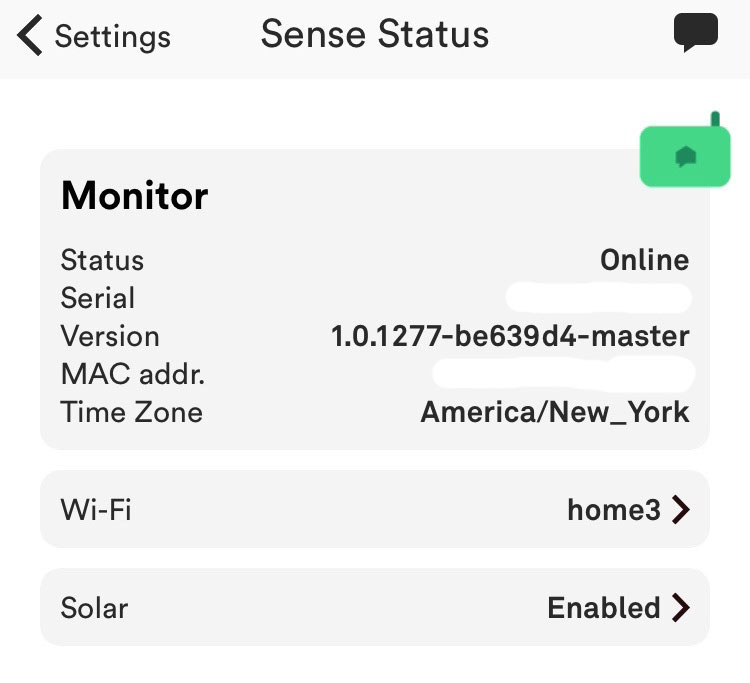
Status screen. We understand that upon installation you’re keen to see a bunch of device bubbles and the fact that it takes awhile is disconcerting. We’ve now launched a Status Screen under Settings so that you can track the progress of device detection. The status page will also let you know the status of the automated signal checks (described above).
Web version of Sense Home app. We’ve received many requests for a web-version of our app. We’re working on building this now, and hope to have an early test version out in the coming year. More details to follow.
How you can help
We recently launched an in-app survey to get your feedback on how we’re doing and what we should improve. You can see for yourself the results of that survey below, but it’s very clear to us that you want to train Sense!!
Unfortunately, Sense needs to see your devices working in their natural mode to learn about your house, so “training” Sense doesn’t help in the way you think it might. In addition to seeing lots of examples devices in their normal operating modes, Sense needs to see the behavior of other devices in your home, so as not confuse one device with another. You can read more about that here and here.
Here’s how you can help us:
- Send us in-app feedback when we’re wrong about a device.
- Track down and rename your “unnamed” devices. Here’s how.
In addition to continued work across the range of devices we see, we are also launching some new efforts around targeted device types. For this, we will be periodically asking all of you for specific types of help. We’ll be doing this over an increasing set of devices (and will soon create a survey to get your vote on what to work on next!).
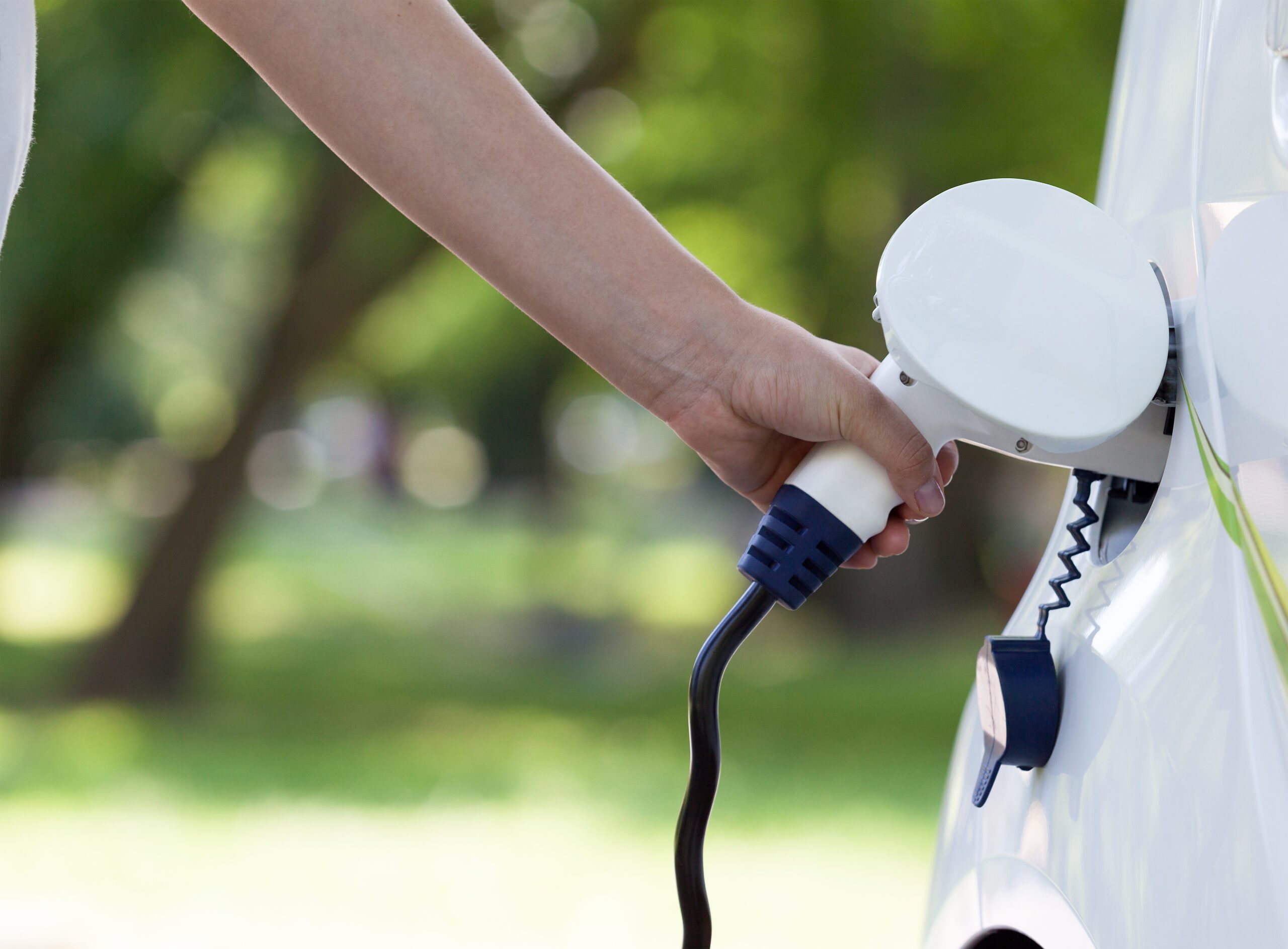 Today, we are starting a targeted trial of this with Electric Vehicle Chargers. If you charge your EV at home, you may see it appear in your detected devices soon!
We are very grateful and excited about all the feedback you’ve been emailing us. We will continue to work on features so that you can help improve Sense!
Thank you and happy sensing,
Mike
The post November 2016 | Update from Mike appeared first on Sense.
]]>The post What Are Data Science Jobs Like? appeared first on Sense.
]]>Ghinwa has spent many years working in the data science field, and was recently nominated for the Arab Edition of the MIT Technology Review’s “Innovators Under 35” Award. She received her bachelor’s degree in computer and communications engineering in her home country of Lebanon, before moving to the U.S. to attend MIT and pursue her master’s degree in information technology, then her doctorate in electrical engineering and computer science, also at MIT.
Here’s what Ghinwa has to say about not just what it takes to become a data scientist, but to understand what types of roles and companies to look for.
Q: What are the skills you need to become a data scientist?
Ghinwa: It’s good to be comfortable with statistics. Very important, because you need to know how to analyze the data, and then know the significance of that analysis. You should also look into machine learning classes, even though they often go really broad, while in actual jobs you might zoom in really close on just one aspect of it. There are lots of online classes about data analytics, and also about frameworks for handling big data. You also need to know a solid programming language. A lot of people like Python or R. Mathematicians like R, but I’m using mostly Python right now.
Q: Is there a certain type of person who is better suited to data science?
Ghinwa: I think there are three things you need to be: rigorous, as in, mathematically rigorous, an adventurer, and also you need a passion for the project you are working on. You can’t just have one or two. If you’re really math-y, you can get stuck in the approach and be afraid to make assumptions or simplify the problem. You’ll get stuck in the theoretical and try to fit everything under one model. That’s why you have to be adventurous and take leaps sometimes in order to find the answers you’re looking for.
Q: How much of data science work is team-based versus individual?
Ghinwa: Well, you share a common code base, so you need to collaborate with each other and review the code as it grows. And you all need to make sure that it doesn’t break. It’s also useful to be part of a team because then you can discuss approaches with them. So if you’re looking at a problem and have no idea how to handle it, it’s nice to be able to take it to somebody else who can look at it from an entirely different perspective.
That said, the bulk of the work we do is on our own. When we’re working, we usually aren’t all gathered around one computer.
Q: You’ve worked both at larger companies, like DataXu, and small startups, like Sense. What is the difference between how data science works in differently-sized companies?
Ghinwa: Well, I suppose things are more standardized at larger companies. You have a better idea of how to do what you need to do; you don’t have to make as many leaps. And then if you want to really change the way things are done, it’s really hard to make that change, and it would take a lot longer, because there are so many people working on a project, and processes are so entrenched.
With really young companies, the work we’re doing is a lot more explorative and innovative. We don’t really know how we’re going to solve a problem right at the beginning, so there’s more experimenting, and while we might be using basic pre-existing techniques, we’re adapting them for this totally new field. And we’re making new changes and iterations all the time. You’re also less likely to be working with bigger data sets.
Q: Speaking of bigger data sets, there’s a lot of attention on the “Big Data” field right now. What makes working with Big Data different from working with “small data”?
Ghinwa: A lot of the basic algorithms and approaches stay the same no matter how big the data set is. The basic statistical analysis that you use in the beginning to explore the data is also the same no matter how big the size.
What really changes are the tools you use, and the framework you use. You really have to think big with big data. It’s not just ‘oh I have a hundred times more data,” it’s that you have to approach the data very differently. You can’t just process the data sequentially like you would with smaller data sets. You have to use cluster computing and process the data in parallel, otherwise there’s no way you could go through all of the data.
Q: What else distinguishes different kinds of data science jobs?
Ghinwa: Well, obviously the field you’re in is a big factor. I’m interested in fields that have an effect on the world, well, hopefully a positive effect, like health, or education, or energy conservation. So, depending on the field, the problem you’re trying to solve changes.
The field you’re in also changes how you approach problem-solving. I used to work in speech recognition, which already had decades of work backing it up. When I’d run an algorithm, I’d know what I was doing. Now I’m interpreting electricity signatures from homes and breaking them down into individual devices, and that’s a type of data that very few people get a chance to look at. So I really just kind of explore and hope that what I’m trying will have a useful end result, because I have no idea.
It’s nice. I find I’m very curious. You try, and you know, you’re flailing. You don’t even know what’s going to work. It’s very rewarding.
Q: So what does the career path for a data scientist look like? How far can you go with it?
Ghinwa: You can go anywhere, really. Some people like to stay really close to the data, so they become like, a senior analyst so they can keep their head down and crunch numbers as much as they like, and others go up and become a CTO, or even start their own company and become CEO.
It’s like a lot of tech jobs, where as you climb the ladder so to speak, you get farther away from the really technical stuff. That said, if you’re in a small company, you can still spend a lot of time doing code and things like that if you want to.
Back when I first started, I thought, ‘I’m going to be an engineer, and keep my head down, stick to the data for all of my life,’ but as time passed, I started thinking ‘maybe I can grow and progress with this, try more leadership roles.’ So it really depends on what you want to do, that’s something you can choose for yourself.
Q: What advice do you have in considering different data science job openings?
Ghinwa: Well first I look to see what type of field it’s in, to see if they’re working on a problem I think is interesting. That’s the big thing, especially because the job listings don’t usually say a lot about the specific work you’ll do, they’ll just mention a programming language you should know or some basic things like that.
What I want to know as I go through the interviews is whether I’ll be getting to try new things, like solve new problems and create new stuff, or whether I’ll be doing more maintenance-type work. I’d rather avoid maintenance work, and I want to keep adding to my skillset.
Q: When you’re hiring someone to be a data scientist, what do you look for?
Ghinwa: I look for a strong technical background. That’s a math background, statistics, machine learning, programming languages. But I also want someone who is fun to be around, and someone who is self-driven, but who isn’t afraid of working with a team.
And that’s the word from Ghinwa! If you’ve got an analytical mind and aren’t afraid of taking some chances, data science might be right for you!
The post What Are Data Science Jobs Like? appeared first on Sense.
]]>