The post Looking Ahead: The Next Chapter for Sense appeared first on Sense.
]]>To everyone who installed a Sense monitor, explored their energy data, and made a few smart changes—thank you. You helped build what Sense is today, and you’re helping shape where we’re going next.
Today, we’re sharing an important update and a look at what’s ahead. We’ll stop selling the Sense Monitor by December 31, 2025. But, don’t worry – we are continuing to support and improve the Sense app and will continue to support existing Sense monitors.
In fact, the Sense app is now going to be available to a much larger set of customers. We are now embedding Sense directly into the next generation of smart meters and rolling out through utility partners across the country, and soon, around the world. These meters are expected to reach tens of millions of homes in the next few years.
This approach means no extra hardware, no installs, and more people getting energy insights that make a difference.
It wasn’t an easy decision to stop selling the hardware version of Sense. The Sense monitor is how many of you first discovered the power of real-time energy insights. It proved that better awareness could lead to better choices and real savings. But to make an even bigger impact, we are expanding to this much more scalable model.
Our mission has always been to make energy efficiency simple, actionable, and accessible to everyone.
A Change that opens doors
This focus on delivering the Sense experience through smart meters has a number of benefits.
More access to energy data for more people
Until now, using Sense meant buying a monitor and setting it up. But not every household has the means or interest to do that. With Sense built into smart meters, we’re breaking down those barriers.
Better tools for grid reliability
The grid is under pressure. With Sense in the meter, utilities can see energy trends in real time, helping them better manage demand, avoid outages, and plan smarter infrastructure upgrades.
Faster progress toward decarbonization
Clean energy is crucial, but using it wisely is just as important. Sense can help shift usage away from peak times, spot waste, and reduce unnecessary demand. These small choices, made at scale, can significantly lower carbon emissions across entire communities.
If you own a Sense Monitor, you’re still at the center of the experience.
This update is about expanding access, but it doesn’t change our commitment to you.
No matter how you connect to Sense, monitor or smart meter, the app stays at the heart of the experience.
We’re building new features to help you use energy more efficiently, manage costs, and understand the impact of your choices. Every update is designed to help you do more with the energy you already use.
If you have a Sense monitor, you’ll continue to get:
- App and firmware updates
- Ongoing device detection improvements
- Energy data access
- Security patches
- Dedicated customer support
Thank you for being part of the journey.
To our customers, partners, and supporters – you’ve helped Sense grow from an idea into a meaningful contributor to solving our world’s energy challenges. This next chapter is all about reaching more people, faster, and creating a more resilient and reliable grid for all of us.
We’re grateful for your support, and we’re excited to keep building what’s next, together.
The post Looking Ahead: The Next Chapter for Sense appeared first on Sense.
]]>The post How to Get the Most from Your Solar System appeared first on Sense.
]]>With Sense Solar, you can learn when your home generates the most solar energy, identify energy hogs, and adjust when and where you use energy in your home to make the most out of your solar system. Here are four tips on how you can use Sense Solar to monitor and manage your energy usage.
1. Track Production and Use in Real-Time
Sense provides a real-time view of the solar power you’re making and using right now. Some guides will say just to use one high-wattage appliance at a time, but with Sense, you can see exactly how much energy you’re using in your home.
Because of Sense’s real-time technology, you can identify which appliances or systems use the most electricity and adjust when you’re using them to make the most out of your solar system. For example, if you see that you’re producing solar energy near your system’s maximum capacity, and your washer and dryer use the most energy, then you’ll want to do your laundry during peak production times.
How It Works
To use Sense Solar to monitor your energy production in real-time, follow these steps:
- Track which appliances and systems use the most electricity throughout the day through Sense.
- Look at your solar system’s real-time energy production.
- Then, adjust your energy use as your solar system produces the most electricity.
2. Look at Short-Term and Long-Term Trends
In addition to acting in the moment, you can use Sense to see your historical production and usage and plan your activities moving forward.
Let’s say you create a monthly goal to use a set amount of energy from the grid, a certain amount of solar energy, and a set amount of total energy from both the grid and your solar panels, but you’re trending behind. Or, perhaps you set a goal of using only as much energy as your solar system produces.
With your goals in mind, you can aim to use more devices when the sun is up. If possible, do that laundry during the day. Pre-cool your home mid- or late-morning when your solar production is really starting to ramp up.
How It Works
Make the most out of your monthly or yearly goals by trying out these tips:
- Look at Sense’s monthly or yearly breakdown of your solar energy production. Overall, which months of the year generate the most electricity in your household? You can use this data to adjust your energy consumption and decrease energy usage when solar energy production trends are low.
- Compare your energy usage to identify appliances and systems that use the most energy overall: By looking at long-term trends, you can see which appliances and systems consistently use the bulk of your energy. While a washer and dryer may use more energy in real-time, you may find that your HVAC system or water heater is the biggest source of energy consumption overall.
3. Estimate the Impact of Capital Improvements
Is your air conditioner an energy hog? Have you been thinking about upgrading to a heat pump? Sense Solar can help measure your current air conditioner use so you can compare it to the average consumption of a heat pump. The same goes for any appliances or systems in your home. From your refrigerator to your washer, to your dryer to your water heater, knowing exactly how much energy they use can help you determine if you need to upgrade to a more energy-efficient unit.
How It Works
Deciding whether or not to upgrade an appliance or home system requires some research, so follow these steps to help you make energy-efficient decisions.
- Go into the Sense Home app to track short-term and long-term trends.
- Identify areas of high energy consumption.
- Look at how many kilowatt-hours high-energy appliances and systems use per month or year.
- Compare the number of kilowatt-hours to that of a new system.
- Replace old appliances and systems with energy-efficient systems, like Energy Star-certified appliances, heat pumps, or tankless water heaters.
- If you have new and efficient appliances, consider increasing the number of solar panels in your system if you see that you’re not producing enough energy to support your home’s energy consumption.
4. Remember, Your Solar Isn’t Limitless!
Maintaining energy-efficient habits is another way to make sure you produce more than you use. Studies have shown a “solar rebound” where consumption increases by 28.5% on average when users adopt solar panels.
To avoid increasing your energy consumption after installing solar panels:
- Keep an eye on your energy consumption by using Sense Solar.
- Compare your energy consumption from before you installed a solar panel system by looking at old energy bills and comparing them to your data inside Sense.
- Decrease energy consumption if you see that you’re accidentally consuming more energy after installing solar panels and haven’t made any changes to your lifestyle.
The post How to Get the Most from Your Solar System appeared first on Sense.
]]>The post How Electrical Panels Work appeared first on Sense.
]]>The power to run your appliances typically begins at a power plant. It travels over long distances through high voltage wires–the tall towers that disturb many a homeowner’s views out their windows–through a transformer at a substation that steps down the voltage, and then through another local transformer, one of those big “cans” you may see on telephone poles along the road, where it steps down again. Finally, the electricity passes through the power lines to the meter at your home and into the breaker panel. The voltage that could be measured in the thousands at the beginning of its journey is rated at 120V or 240V at your panel—just the right amount to keep your home running.
Figure 1 shows a schematic of the typical breaker panel you will find in the basement, utility closet, or garage in most homes today. It is a gray metal box with a door. The main circuit breaker is on the top, which can shut off your home’s entire power supply. The power from your meter feeds into the main circuit breaker. Below the main circuit breaker are two vertical rows of branch circuit breakers that feed into sections of your home. Yours might be labeled “Dining Room,” “Kitchen Lights,” “Master Bedroom,” and so on. Appliances that use a lot of energy, like HVAC systems or electric stoves, may have their own breaker.
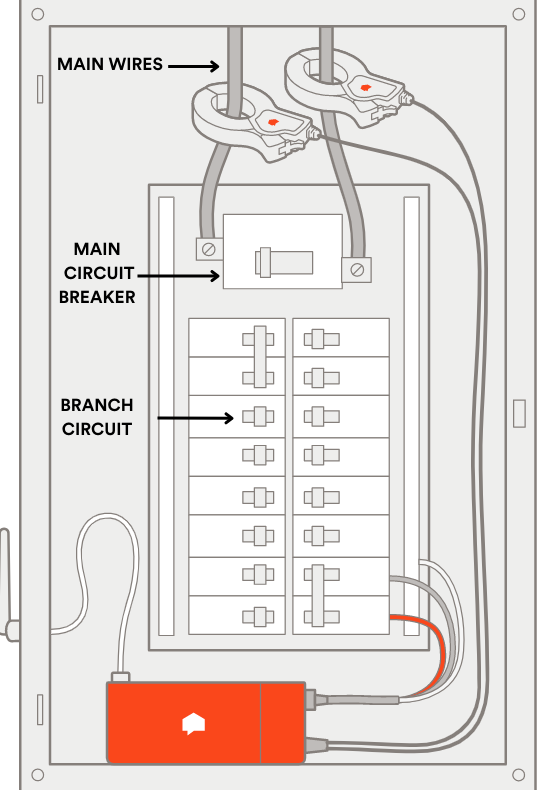
Figure 1
A panel cover protects the live mains that conduct power into the panel from the utility meter. Leave the panel cover closed at all times. Electricians are trained to work carefully around those dangerous mains when installing the Sense Home Energy monitor or making repairs to your system. The figure shows an electrical panel with the panel cover open, revealing the mains.
How Home Electricity Works
To understand home electricity, let’s start with basic terminology.
- Voltage: the electrical force that pushes electricity through a wire, measured in volts.
- Current: the flow of electrons through a wire, measured in amperes (amps).
- Power: the electrical power in a circuit equals voltage multiplied by current. The higher the voltage (the push) and the higher the current (the flow of electrons), the higher the power, which is measured in watts. 1000 watts = 1 kilowatt.
- Energy: The power an electrical device uses over time, expressed as kilowatt hours (kWh).
- Resistance: A measure of the opposition to current flow in an electrical current, measured in ohms.
Ohm’s Law describes the relationship between voltage, current, and resistance.
Voltage = Current (amps) x Resistance (ohms)
In other words, if you are “pushing” a high current through a circuit with high resistance, you need to pump the voltage. The human cardiovascular system provides a good analogy. The blood flow rate is current, the vessels and capillaries provide the resistance, and the heart provides that voltage to keep the blood flowing.
It’s helpful to know the terminology because the capacity of electrical panels is described in amps and volts, while the power draw of appliances and lights is described in watts, and your utility bills you for the power your home consumes in kilowatt hours.
How a Panel Controls Electricity
You may remember when circuits were protected by round, screw-in fuses that had to be replaced each time they were “blown.” New electrical panels have circuit breakers that don’t need to be replaced for the life of the breaker box. In older homes, the total current into the house was set at about 100 Amps, maximum. Newer homes that are bigger and have more electrical devices can require 200 Amps or more.
The electrical current divides into circuits in your house. Each circuit covers an area of the house and all the electric appliances in the area. Each breaker in the panel will trip at a different limit determined by the breaker’s amperage rating. This is also true for the main breaker. So in a 200A panel, if more that 200 amps are used across your home, it will trip the main breaker, minimizing the possibility of sparking or fire.
When a circuit breaker does its job shutting off an overloaded circuit, the breaker switch pops into the middle, between the on and off sides, which stops the current flowing through the breaker, similar to the way a light switch turns a light on or off. To reset your system–after turning off a couple of your appliances to relieve the circuit–you flip the breaker switch to the off position and back to the on position. It makes a distinctive clicking sound that most homeowners are familiar with.
If you expand your house, upgrade a major electrical appliance or buy an EV, you may need to upgrade your breaker panel to meet a high load. If your main breaker is tripping frequently, you may need to upgrade. It can cost $3,000 to $5,000 to upgrade a 100 amp capacity panel to 200 amps. Also, if your panel simply doesn’t have room for additional circuits, a licensed electrician may install a subpanel to expand it without changing the overall service level.
Once the power comes into your house and gets used by your electrical devices, the leftover electricity flows back out of the house via the mains.
Sense System Operation
The Sense Home Energy Monitor shown at the bottom of the panel in the figure gives your electrical system a Ph.D. in Electric Engineering—making it a very smart home. The Sense sensors clip around the main circuits inside the panel and read the electrical current 1 million times per second, while machine learning analyzes the patterns of devices turning on and off. The optional Sense Flex sensors can track solar power or up to two circuits of your choice, such as an HVAC system, dishwasher, or electric oven.
As you see electrical patterns in the Sense Home app, you can make practical changes to your home energy use that will save you electricity and money while minimizing the greenhouse gasses you create.
The Sense Home Energy Monitor can be installed in various panel configurations, including these:
- Split service systems up to 400A where service is provided via dual panels.
- Subpanels, provided that the monitor is installed in the main panel and the sub panels are downstream of this panel.
- Combination panels, using Sense’s re-designed slimmer sensors.
- Recessed or flush-mounted panels, using a specific installation process. Efficiency Vermont has been in the business of helping Vermonters and anyone who will listen, save energy and money and decrease emissions for over twenty years. The nonprofit points to three benefits associated with the Sense monitor. First, you can make more informed choices if you an understand how much energy each electrical devices uses and when it uses it. For example, it can make you an energy “vampire” slayer. A vampire is any device that uses standby power even when it is “off”. Devices now are losing less and less standby power, but you can still save energy and money by using “smart strips” that shut off devices completely when they are not in use, like a TV set-top box or an audio power bar. A study done in 2015 by the Natural Resources Defense Council showed that you can save as much as a quarter of your energy use by slaying your vampires. Second, you can find out which devices use the most electricity. Is it the fridge? You can decide to swap out an older model for a highly efficient Energy Star model or adjust how it functions to use less energy. Or you can find out where the lights are on when not needed and start paying attention to the off switches when you leave a room.Finally, a Sense monitor can give you peace of mind while away from home. The Sense monitor will let you know if you left the fridge door open or forgot to turn off your stove.Using Sense will make your home smarter. But even more important, it will make you and your family smarter and wiser about your energy use at home. At the very least, if you read this article, you will know much more about breaker panels than most people. It’s a start.Jim Gunshinan is a science writer who covers energy and the environment. He was the editor of No Regrets Remodeling, Second Edition, a science blogger for a PBS affiliate, and editor of a magazine covering green home building and renovation. Jim lives in Walnut Creek, California
The post How Electrical Panels Work appeared first on Sense.
]]>The post Sense gets flexible with Flex Add-on Sensors appeared first on Sense.
]]>- Support for 400A split-service panels; or
- Ability to monitor up to two 120V or 240V dedicated circuits in order to track a major appliance or device; or
- Tracking for home standby generators.With Flex sensors, you can enable one of these three options.
A fourth option is to use Flex add-on sensors to track solar power (see more details in the Compatibility & Installation section below).Option 1: Track important appliances with Flex add-on sensors
In most homes, a few appliances, like water heaters and HVAC, account for a significant chunk of the utility bill. Tracking these home energy hogs can help you save money and identify potential failures earlier.
Flex sensors can monitor the biggest energy hogs in the home right out of the box. Track anything that’s on a dedicated circuit, including mini-split heat pumps, EV chargers, electric dryers, electric water heaters, and variable speed motors found in energy-efficient HVAC and pool pumps. You can use Flex sensors to monitor up to two 120V or 240V circuits in most homes.
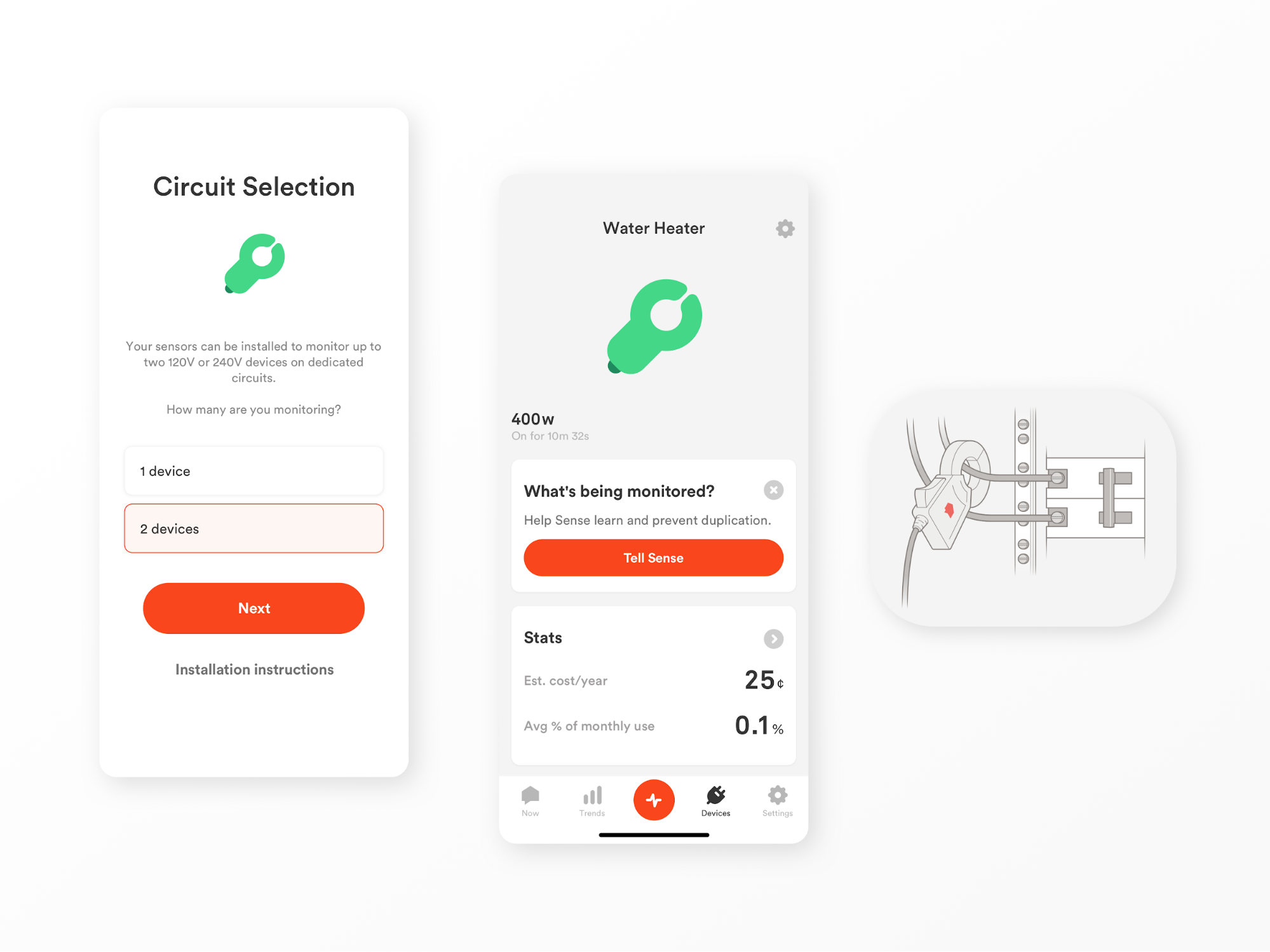
Track one or two devices on dedicated circuits to find out whether they’re energy hogs. Devices tracked via Flex sensor’s dedicated circuit monitoring appear along with all the other devices in the Sense Home app, so you can review their data by day, week, month, year, or billing cycle, or set notifications for when the device turns on, off, or runs for a certain time period.
With Flex sensors, Sense has three ways to gain insights into the devices in your home:
• Advanced machine learning automatically identifies devices by their energy signatures;
• Flex sensors track appliances on dedicated circuits; and
• Sense integrates with energy-aware smart plugs so you can track and control individual devices.With these options, you’ll see what’s on or off in real time and know your home’s energy usage.
Option 2: Flex sensors for 400A split-service panels
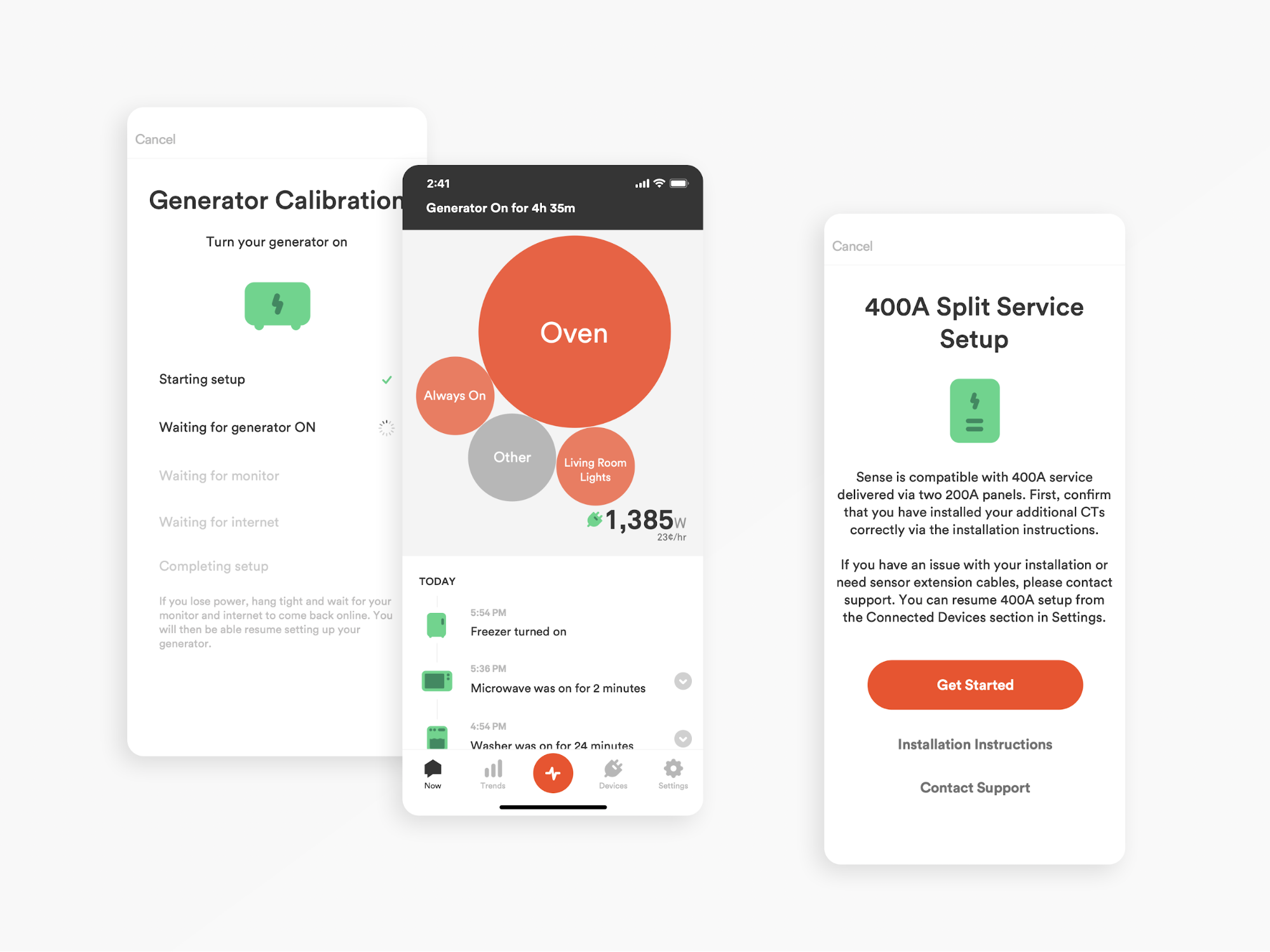
Now the Sense Home Energy Monitor is compatible with split-service electrical systems rated up to 400A with Flex sensors. Most new homes have 200A service, but homes with higher power requirements can require 250A or 400A service. For instance, 400A service may be needed in large homes or houses that rely entirely on electricity. With Flex sensors, users with split-service 400A service can now see their whole home’s energy usage in the Sense Home app. The new Flex sensor also supports other dual-panel systems, like dual 100A or dual 140A.
Option 3: Standby generator tracking with Sense
Alternatively, Flex add-on sensors can be used to track a home’s standby generator. As storms increase in intensity and frequency due to climate change, many homeowners are opting to install backup generators to keep the lights on. Using Flex sensors, Sense will alert you when your standby generator takes over, track its operation and report how much energy the home is using. The Sense Home app gives you peace of mind, knowing your generator is functioning correctly even when you’re not at home.
Flex sensors support standby generators that power the entire home or an individual subpanel. They don’t currently support setups where the generator feeds directly into a breaker in the electrical panel.
Compatibility & Installation
With the debut of Flex add-on sensors, customers who have a Sense monitor and want to upgrade to solar or add these three options should buy Flex sensors. Flex sensors connect to the middle (solar) port on the Sense monitor, so if you already have Sense Solar (with the Solar add-on connected to the middle port), you cannot add Flex sensors.. Also, if you have solar panels on your home, they’re feeding energy into your electrical panel whenever the sun shines, so you’ll need to use Flex sensors in the solar configuration to get an accurate and complete picture of your home energy data in the Sense Home app.
Depending on the configuration of your panel and the distance from a subpanel, additional panel or generator, you may require a sensor extension cable.
We recommend a licensed electrician complete Flex add-on sensor installation following the steps in the appropriate installation guide below.
• Sense with Dedicated Circuit Monitoring Installation Guide
• Sense with 400A Split-Service Installation Guide
• Sense with Generator Installation Guide
• Sense Solar Installation GuideOnce an electrician has successfully completed installation, navigate to Settings > My Home > Connected Devices > Sensor Sources and select your desired configuration. Then, follow the in-app instructions to complete set-up.
To take advantage of these capabilities, you can order Flex add-on sensors. For questions about compatibility or installation, contact our Support team here.
The post Sense gets flexible with Flex Add-on Sensors appeared first on Sense.
]]>The post What is that Unnamed Device? appeared first on Sense.
]]>For many larger appliances, Sense sees the individual internal components that make the entire device work. Often, the components are hard to pair with one another. For example, a refrigerator contains a heating element for a defroster along with a compressor for chilling the fridge. Both of these components may turn on/off independently of one another and operate at different times.
Sense may have enough data to combine these individual components for you but it doesn’t always know to link components together if they look like two individual devices. Depending on the type of appliance you have, you may see a different combination of devices than listed below. For example, a high-end refrigerator often has separate compressors for both the refrigerator and the freezer, along with separate fans and touchscreen components.
When you use the Sense Home app and it starts detecting devices, you’ll see unnamed devices with names like motor 2 or heat 3. To help you identify those devices, we looked at six appliances that have multiple components to break down what Sense detects and how the components work.
AC (Central AC)
A typical AC unit has two key components detected by Sense that consume energy: a motor that runs the compressor and a motor that drives a blower fan (which is often located inside the furnace). These devices may be detected individually or together.
Sense usually detects the AC compressor first, and sometimes it is the only component detected for an AC unit. There is an additional motor in the outside fan that Sense does not typically identify as a separate motor because it runs at the same time as the compressor.

Motor
What it does: A compressor motor compresses the refrigerant, which causes the gas to warm up and turn into a liquid while traveling through the coils to transfer heat out of your house. In a standard split-compressor unit, the compressor is located in the outdoor unit.
When it’s on: Approximately 2-3 times per hour based on external temperature, unit settings and age of unit.
Motor
What it does: A blower fan motor helps circulate hot or cold air throughout your home until the temperature on the thermostat is reached.
When it’s on: Depending on thermostat settings, a blower fan can be on continuously while the HVAC system is heating or cooling the home.
Clothes Dryer (Electric)
A typical electric clothes dryer has two key components that consume energy at different parts of the standard cycle, the motor and a heater. These devices may be detected individually or together and can vary by the type of dryer.
The settings for your clothes dryer determine what components are active at any given time in a typical cycle and how much energy is being used, which can impact detection by Sense. For example, in wrinkle-free mode only the motor is running throughout the cycle.

Motor
What it does: Creates the circular motion required to turn the dryer drum and blower.
When it’s on: Throughout the entire dryer cycle.

Heat
What it does: Depending on the temperature settings and dryer model, the element heats the surrounding air, which is forced through the dryer by the blower.
When it’s on: Depending on the dryer settings, contents, temperature and lint build-up, a heating element should be ‘ON’ throughout the dryer cycle and turn off when the correct internal temperature is reached.
Dishwasher
A typical dishwasher has two key components that consume energy: a motor that runs the washing and draining pumps and a heating element. These devices may be detected individually or together.
Sense may detect 2 heats in some dishwashers because the heating elements can look different from the early phase (heating the water) than for the end phase (drying the contents.) This could result in partial or complete detection of two separate heating elements.
The settings for your dishwasher can determine what components are active at any given time in a typical cycle and how much energy is being used, which can impact dishwasher detection by Sense.
Motor
What it does: Provides the power for all of the washing and draining operations of the dishwasher (via a pump).
When it’s on: Throughout the wash cycle.
Heat
What it does: Depending on the temperature settings, the element heats the water as necessary to increase the temperature higher than what the hot water heater provides (and sometimes for drying).
When it’s on: At the beginning of a cycle, heating water as it enters the interior of the dishwasher. Depending on the type of dishwasher you have, the heating element may turn on again at the end of the wash cycle.
Heat Pump
A typical heat pump has three key components that consume energy: a motor that runs the compressor, a motor that drives a blower fan, and a heating element. These devices may be detected individually or together, and Sense is most likely detecting a compressor motor when there has only been partial detection of a heat pump. Sense is unlikely to detect inverter or variable-speed heat pumps.
Heat pumps may or may not have a heating element. Depending on the type of heat pump, they can sometimes be paired with a furnace instead of electric backup heat. Mini-split heat pumps don’t have an additional heating element.
Motor
What it does: A compressor that circulates refrigerant that absorbs and releases heat as it travels between the indoor and outdoor units.
When it’s on: Approximately 2-3 times per hour based on external temperature, unit settings and age of unit.
Motor
What it does: A blower fan motor helps circulate hot or cold air throughout your home until the temperature on the thermostat is reached.
When it’s on: Depending on thermostat settings, a blower fan should be on continuously while the heat pump system is heating or cooling the home.
Heat
What it does: Auxiliary heating elements help the heat pump reach a set temperature when heat can no longer efficiently transfer heat from the outside air to the heat pump.
When it’s on: Typically, a heat pump auxiliary heat turns on when the outside temperature is below 35 degrees, the heat pump is in “defrost” mode or if the thermostat is calling for a 3 degree (or higher) temperature increase.
Refrigerator
A typical refrigerator has four key components that consume energy: motors that drive the compressor for the refrigerator and freezer, a fan, a heater that de-ices the freezer, and a light. If your refrigerator has an ice-maker, then it contains an extra heater and motor (that may or may not be detected by Sense.) These devices may be detected individually or together, and Sense is most likely detecting a compressor motor when there has only been partial detection of a refrigerator.
Refrigerators are one of the only 120V, multi-component devices found in your home. Depending on the amperage and location (against a wall, built-in), a refrigerator can be a great option for tracking with a Kasa smart plug (you can learn more about our smart plug integration here). We do not recommend WEMO Insight smart plugs for refrigerators, as they default to ‘OFF’ in the event of a power outage.
Sense does not usually detect the fan in the freezer separately. The fan and compressor turn on at the same time, so fan consumption is typically grouped with the compressor.
Some models of more expensive fridges might have one compressor but two different evaporators (the part that gets cold), and each will have a fan. Those fans might run at different times, for different reasons, and at different speeds and may result in more potential unknown devices detected by Sense than listed below. Other models of more high-end fridges may contain two individual compressors (for the freezer and refrigerator), along with separate fans for the freezers and touch-screen components.
Motor
What it does: The motor inside the compressor adds pressure to the circulating gas, called refrigerant.
When it’s on: An average refrigerator compressor cycles on and off in 30-minute intervals, but this can vary depending on variables including temperature, contents, and how many times it’s opened.
Heat
What it does: A defroster heats the cooling element (evaporator coil) for a short period of time and melts the frost that has formed on it.
When it’s on: Depending on the defroster type, most defroster heating elements will run either once or twice a day for 25 to 45 minutes.
Heat
What it does: An icemaker contains a heating element, which warms the mold to soften the edges of the ice cubes.
When it’s on: Depending on the settings and refrigerator type, an icemaker typically cycles for 1-2 hours while on.

Light
What it does: Illuminates the inside of the refrigerator. Many modern refrigerators use LED bulbs, which operate at a very low wattage and may not be detected by Sense.
When it’s on: When the refrigerator door is open.
Washing Machine
A typical washing machine has two key components that consume energy: motors that drive the drum and agitator, and a heating element for hot water. Sense typically detects both of these components, although these devices may be detected individually or together. Sense is primarily detecting the motor when there has been partial detection.
Motor
What it does for top-loading washers: Turns the inner drum.
What it does for front-loading washers: Turns the inner drum and controls the agitator (also called drum paddles)
When it’s on: Throughout the wash cycle.
Heat
What it does : Depending on the temperature settings, the element heats the water as necessary to increase the temperature higher than what the hot water heater provides.
When it’s on: During the beginning of the wash cycle.
What to do when I identify multiple components of a single appliance?
Once you track down the source of your unknown device (with a significant degree of confidence), you can merge it with existing devices in-app. When an unknown heat or motor pops up in the app, checking the Community Labels can be a helpful place to start while looking for potential sources.
Telltale signs that an unnamed device is part of a large appliance include:
• The unnamed device turns ‘ON’ while an appliance is running, at specific, logical points in the appliance’s cycle, or it coordinates with other detected components in the same appliance.
• The device turns on fairly regularly throughout the day, suggesting it could be part of an appliance like a refrigerator or HVAC that is on continuously. Use device notifications in the Sense Home app to alert you when it’s on or off so you can track it down and check the device’s power meter view to see more details.
Where can I see examples of device signatures?
The Sense Community Device Library is a great resource to see examples of device signatures submitted by Sense users. If you would like to submit a detected device to be added to the library, send our Community Manager a message with your request @JustinAtSense.
The post What is that Unnamed Device? appeared first on Sense.
]]>The post How the Sense Energy Monitor Works appeared first on Sense.
]]>The computer inside your Sense monitor is the brains of the operation. It reads signals from your electrical panel, analyzes subtle changes, and sends energy data to your smartphone so that everything you need to know about your home energy use is in your pocket.
From the Grid to Your Monitor
Installation (which should be done by a licensed electrician) is pretty straightforward and typically takes less than 30 minutes. Two current sensors clamp around the main power feed inside your electrical panel, and then Sense connects to a 240V breaker; there’s no rewiring required. The sensors take advantage of the relationship between electricity and magnetism to non-intrusively measure the current, while the voltage is measured through the same circuit breaker that supplies the monitor with power. The monitor itself only uses about 4 watts, but the 240V breaker allows it to measure voltage on both phases or “legs” of your homes power.
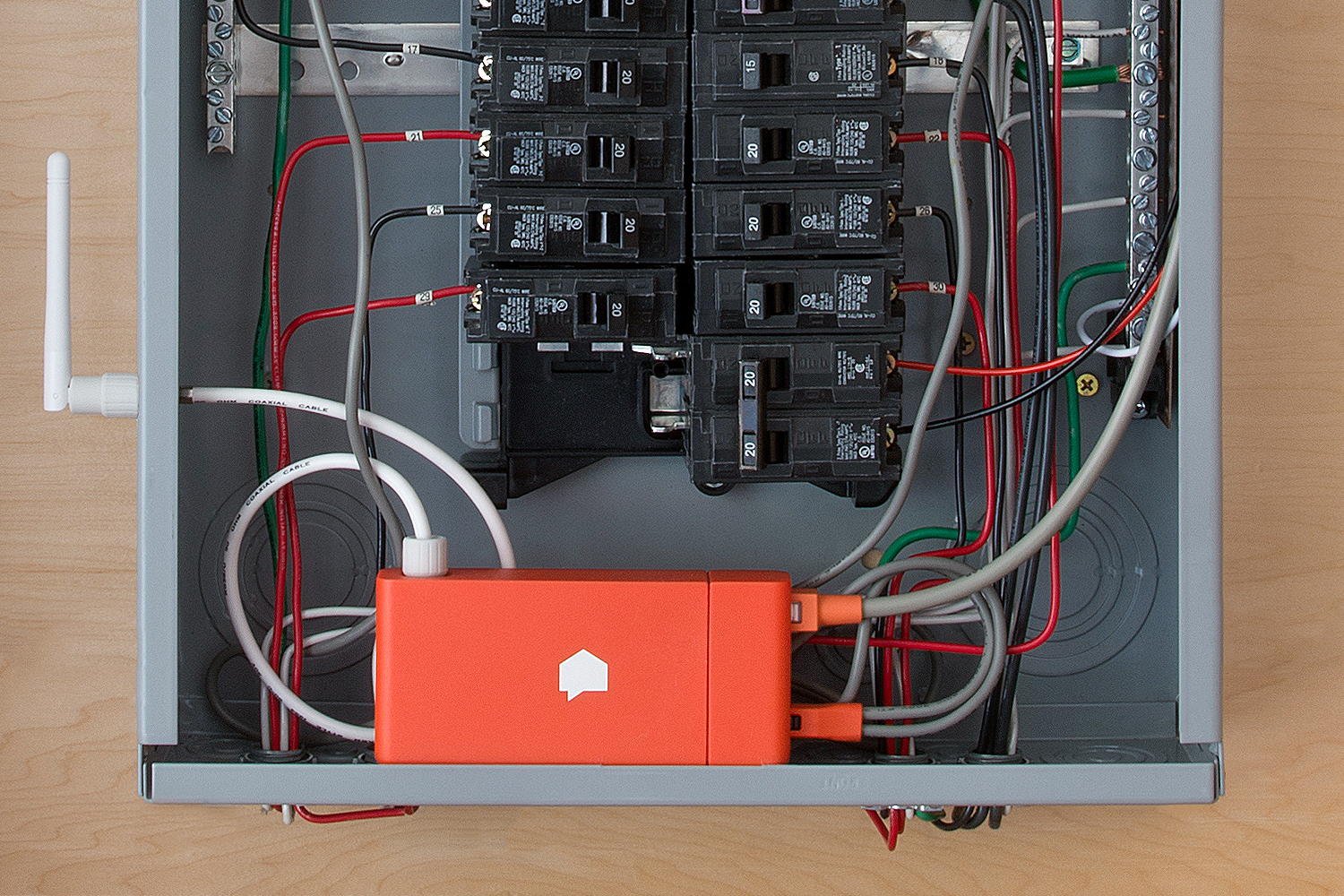
Once the monitor is installed, it begins sampling data at 1 MHz, meaning it’s analyzing about 4 million data points each second. This may seem like a lot, and frankly, it is. This type of high resolution measurement is necessary to deliver the in-depth energy monitoring, device detection, and notification functionality that Sense provides. To put this in perspective, the average smart meter provided by your electric company samples data once every 15 minutes. That means Sense is sampling about 84 million times more frequently than a smart meter. This type of high-resolution monitoring makes it possible for Sense to distinguish similar devices, and helps with our research towards fault detection monitoring to help keep your home safe, and let you know when appliances may be malfunctioning or running inefficiently.
As this data is processed onboard the monitor, small bits of information are also sent through your home’s Wi-Fi to our cloud servers. The computer inside your Sense monitor is doing most of the everyday heavy lifting to reduce the amount of data that needs to be transmitted back and forth, and to be sure Sense isn’t using too much of your internet’s bandwidth.
Automatic Device Detection
Once these bits of information are processed in the cloud, the machine learning algorithms our data science team have developed analyze the data and look for individual devices in your home’s electrical signals. This is a complex process that is rooted in some of the same technology used for speech recognition. Sense is trying to separate the “voices” of each individual device in your home from the “noise” of all the other activity in your home, and then recognizing patterns in these “voices” to help determine what they might be.
Once the algorithms identify a signal as an individual device, a model is automatically developed to track that device within the home. That model is sent back to your monitor so that device monitoring can be handled locally while the servers continue their analysis. Working together, the monitor and servers identify devices in the home and deliver real-time energy data to the “client” side of our software, which is the iOS, Android, and web apps that you interact with every day.
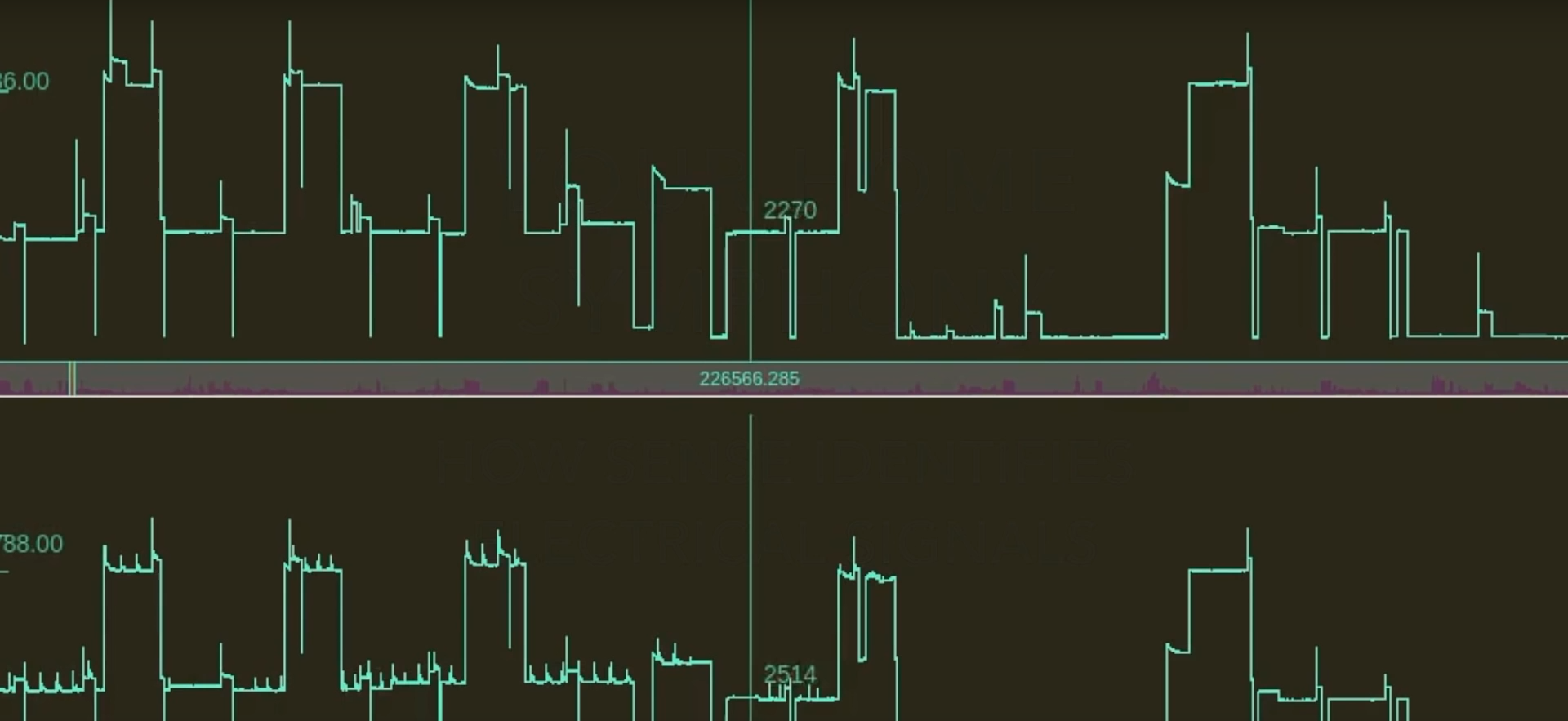
This graph represents changes in whole-home power consumption as monitored by Sense, and some of the distinctive patterns that Sense uses to identify individual devices.
From your home to your phone
With such a long journey, you might think that the data would take a little while to reach your phone, but within a split second, your home’s energy use is ready to be viewed in the Sense Home apps for iOS, Android, and the web. It may take a while for your Sense monitor and our cloud services to determine patterns in your devices and start recognizing devices automatically, but in the meantime, you can learn a lot using the Sense Home app just by looking at the Power Meter and switching devices in your home on and off. How much energy do they use? Is a devices energy use constant, or does it change over time?
Learn more about the Power Meter in this video, and get started conserving energy right away!
The post How the Sense Energy Monitor Works appeared first on Sense.
]]>The post My First Month with Sense appeared first on Sense.
]]>Day 1
The electrician just left. My Sense monitor is installed and I’m staring at the app. There’s a lot happening already. Even though it hasn’t discovered any devices it shows my home is using about 300 watts right now. How’s that possible? Nothing is on! Or is it? Walking around I see that the bathroom fan is on and there’s a lamp on.
Maybe it’s all the devices in stand-by mode, like my Mac and printer, DVR and TV. I guess even the oven clock and coffeemaker are drawing some power. I open the fridge door and there’s an instant jump on the app’s Power Meter. The two bulbs in the fridge are using about 95 watts. I’m impressed, there was zero lag between electrical activity and Sense detecting it.
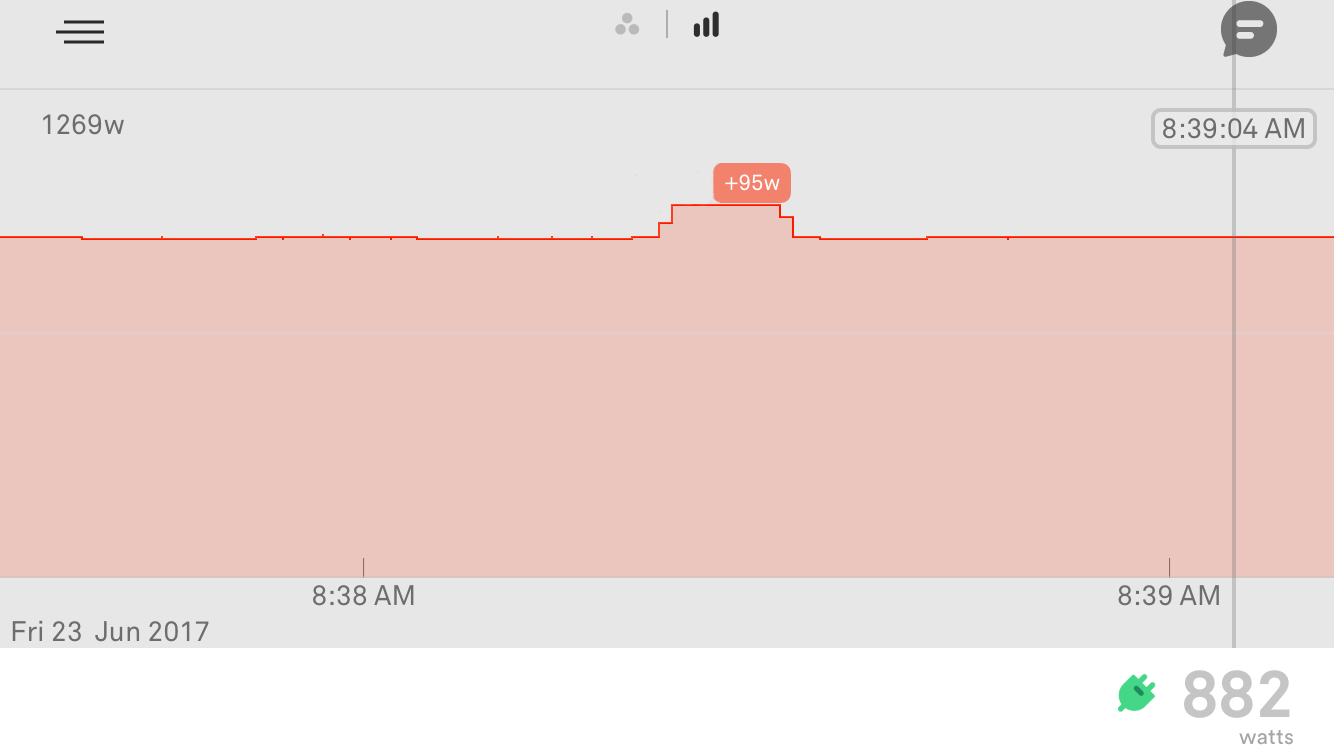
While I can’t see where it’s going yet, I can see how much electricity we’re using. And I can see that the usage has been increasing all day as my wife and kids come home and we start dinner. Someone is watching TV, phones are getting charged, and just about every light in the house has been left on.
As the day winds down, I check the app to see that our peak usage comes between 9-10 p.m.
Day 2
Now we’re getting somewhere. I get an alert mid-morning saying that we’ve made some discoveries.
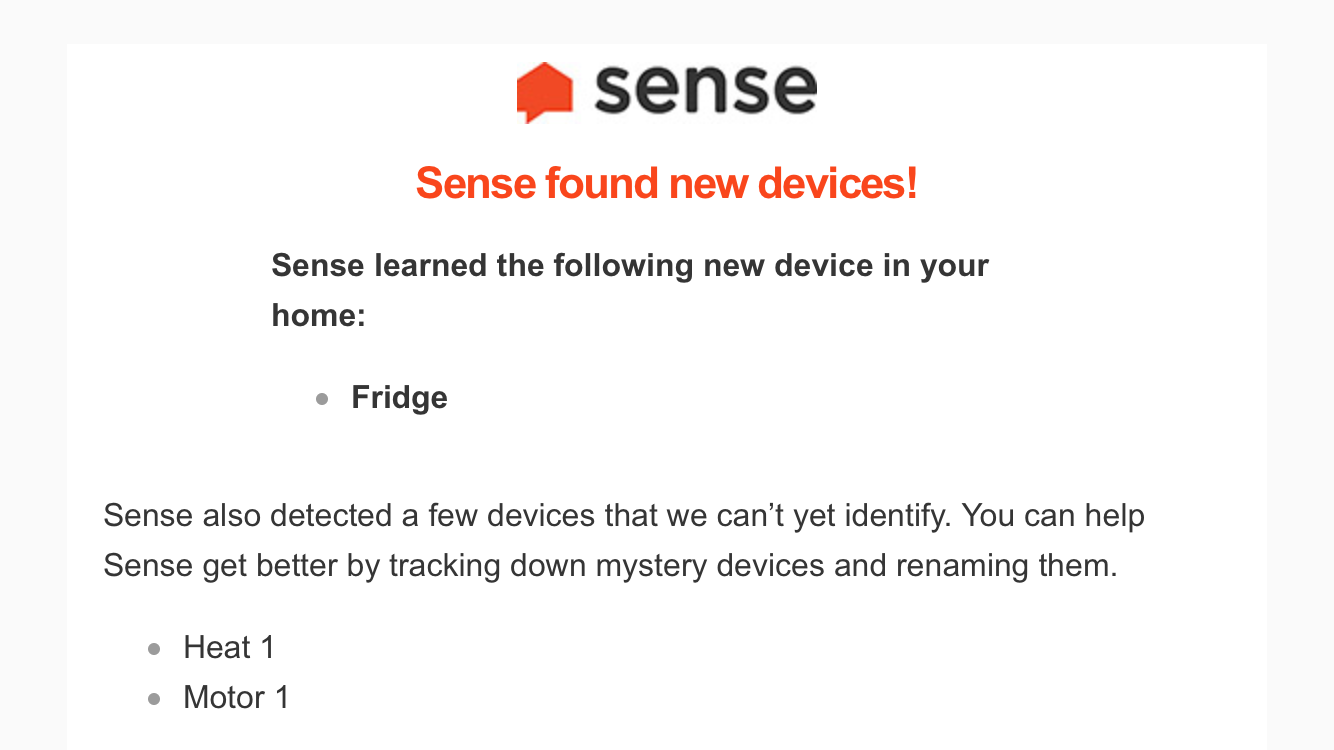
Again, peak usage happens between 9-10 p.m., at .7 kWh for the hour. Total usage for the day is 14 kWh.
Day 3
I’d like to rename Motor 1, so I’m using the Devices screen on the Sense Home app. I can see that it was on from midnight until 11 a.m., but I can’t think what it could be. It will require a little more detective work. We determine that Heat 1 is the coffeemaker by looking at historical data, coming on regularly a little before 6 a.m. Just to double check this, I opened the app and then started the coffeemaker. Device confirmed!
Day 4
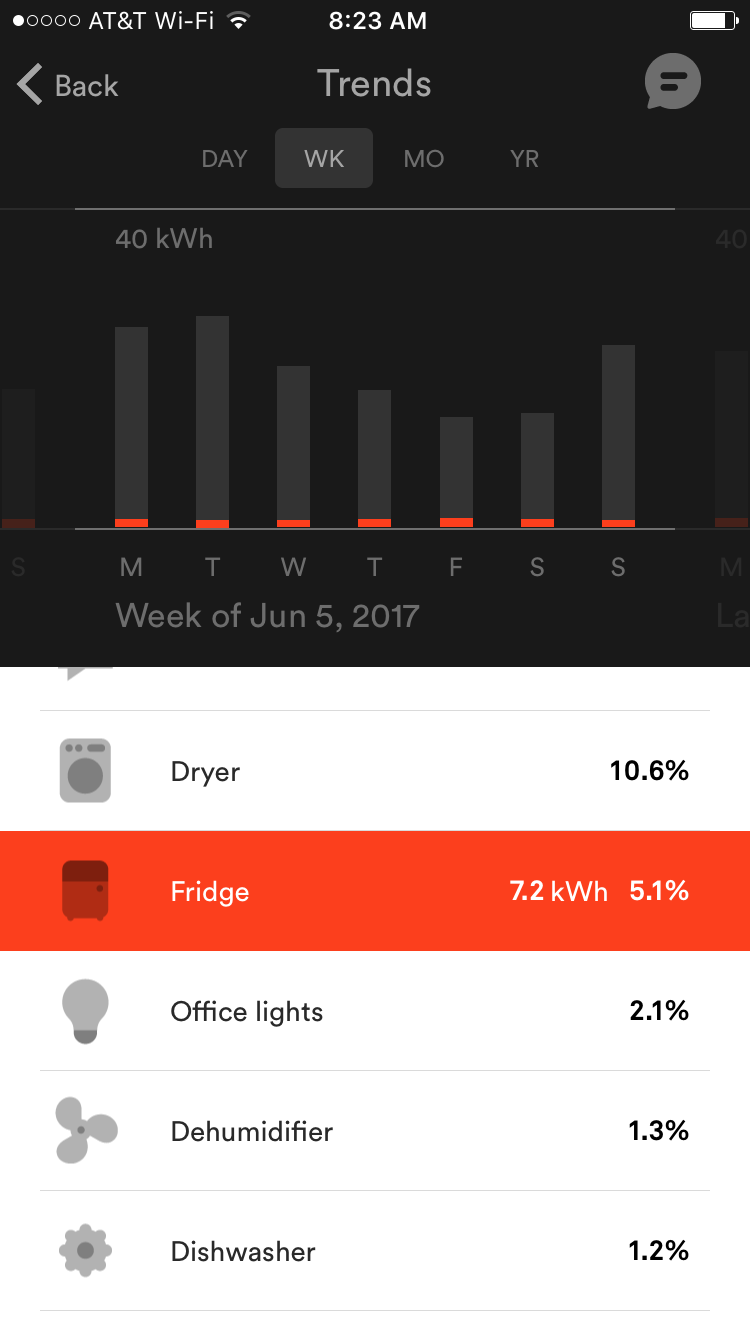
I’m curious about the fridge’s consumption, so I go to the Devices screen, tap on the fridge and see its daily usage highlighted in red. It has been very consistent over the past few days, but as the hot, humid Boston summer gets into full swing, it will be interesting to see if that changes.
Highlights from Week 2
We’ve been discovering and labeling new devices every few days now. The lights in the office were easy to label since I work from there regularly – knowing your usage patterns greatly simplifies identification. Something interesting: the office light fixtures use 3-way (incandescent!) bulbs, both set to the third click – 150 watts each. When you flip the switch, you instantly see a jump of about 300 watts on the app’s Now screen.
Compared to everything else that’s going on in our home, that seems like way too much energy for lighting. I haven’t replaced these bulbs in years, but now that I see how much they suck, I’m switching to comparable LEDs.
One device took a bit of teamwork to identify – Motor 2. Looking at historical data, it went on Saturday around 8 a.m. for 4 minutes, off for a few, then on again for 10 minutes. Stumped, I asked one of my kids who reminded me we were baking that morning. Understanding the behavioral context, we knew that Motor 2 was the stand mixer – mystery solved.
Week 3
Sense isn’t just learning about my home’s energy consumption, it’s teaching me to make smarter choices. The fridge uses on average 110 watts when running – but we have no alternative. But with the office lights (now down to 64 watts thanks to 2 LED bulbs), I have an alternative for part of the day – sunlight.
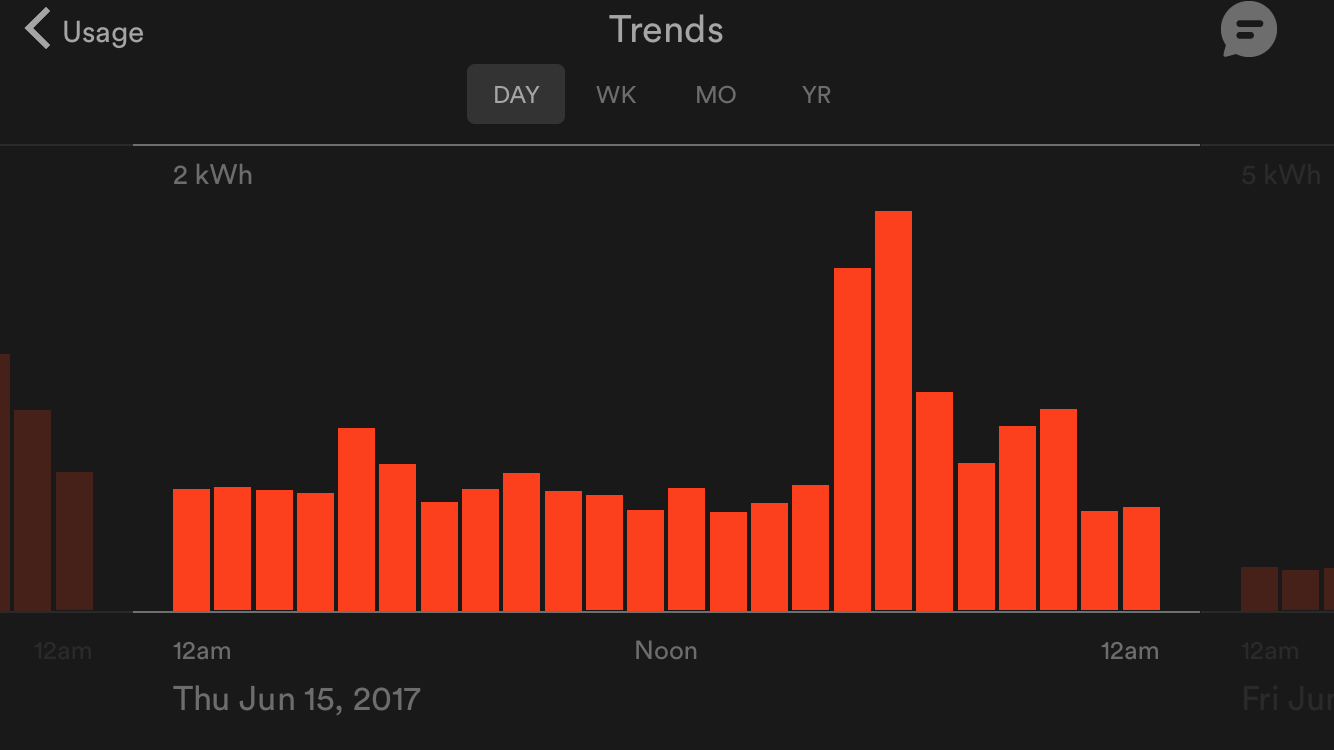
Also, it’s clear why energy rates are higher during the day – that’s when most of us are using most of our electricity. The Trends screen on the Sense Home app shows that our usage peaks from 4-10 p.m. (during our utility provider’s highest rate period). Activities that we can shift to off-peak hours would reduce our electric bill.
Always-On My Mind
Now that I can monitor my always-on devices and see how they really add up, I’m giving these devices serious thought.
To see which are the biggest vampires, I walk around with my Sense Home app set to Power Meter, feeling like a doctor scanning for a patient’s vitals. As I turn devices on and off, I make a discovery. Our printer, which I thought rested in stand-by mode, was never actually going to sleep. The display was constantly on, and using 17 watts. Not huge, but that’s 150 kW per year, or about $15. Since we use the printer so infrequently, I turned it off. But we’ll leave other devices ready to rock, like our Sonos, since we like them available at a moment’s notice.
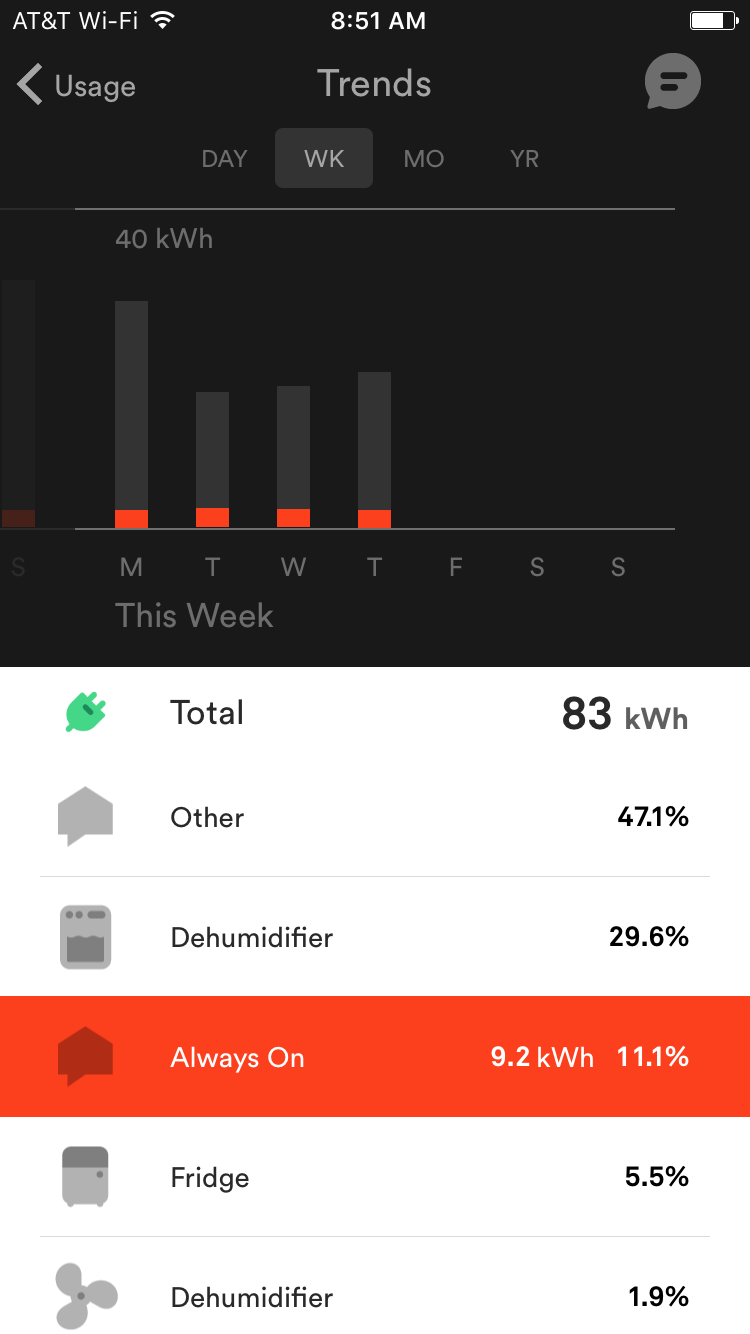
If you want to get energy-competitive (guilty!) you can compare your home against others – a recent study suggests that 25% of residential use comes from always-on devices. At 11%, we’re killing it. I’m not sure why my wife isn’t as thrilled as I am about this.
One Month and Counting
We’ve discovered 20 or so devices – the major stuff like washer, dryer, coffeemaker, dehumidifier, lights and dishwasher. I know there are other things yet to be found, but some devices, like our blender and cordless tool charger, are used so infrequently, they’ll take more time.
The real value for me is understanding our usage. I think of Sense’s data like the calorie information on food packaging. Now I know where we are using electricity, and can appreciate the cost of running that device and if we should replace it.
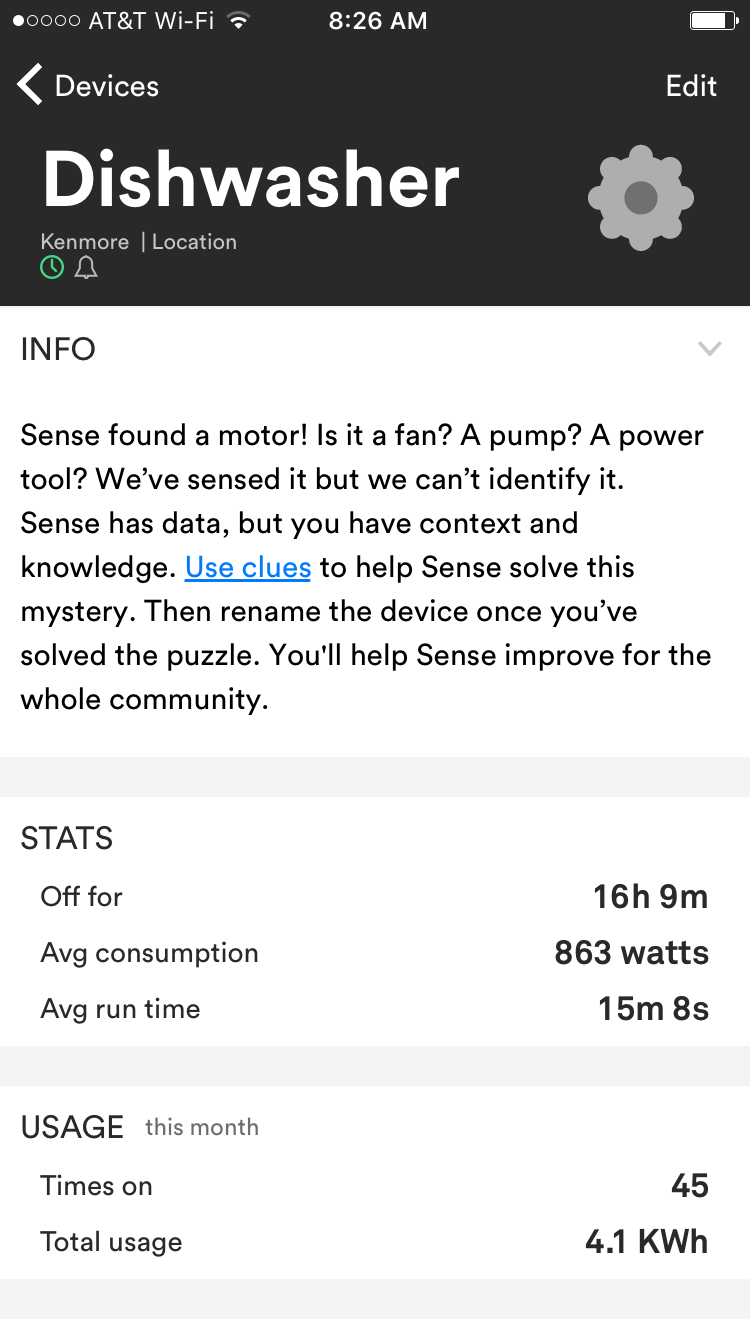
For instance, the dishwasher was here when we moved in 4 years ago, and I’ve wondered if we should upgrade to a more energy efficient model. With Sense, I can see that our machine’s actual usage is about .85 kWh per load, which is very respectable compared to published averages. I don’t know how much we save by not using the water heater or drying functions, but I have the ability to collect the data if I ever want to find out.
All in all, the first month has been an eye-opener. I know far more about what’s going on in my home now, and have the tools to make smarter choices. One of the biggest pluses with Sense is that when we add solar down the road, we’ll have data to make informed system decisions.
Stace Caseria is a freelance writer who makes his living, in part, writing about technology, which is ironic given how worried he is about the robots taking over. He was once an intern at MAD Magazine, and has mechanical sympathy for old Italian cars.
The post My First Month with Sense appeared first on Sense.
]]>The post Will Sense Work In My Home? appeared first on Sense.
]]>What kind of Wi-Fi do I need for Sense to work effectively?
Is Sense compatible with my electrical panel and service?
Will Sense work in my recessed electrical panel?
Is Sense compatible with my solar panels?
Do I need an electrician to install Sense?
Is the Sense monitor UL listed?
You’re collecting a lot of data! How are you protecting my privacy?
Have more questions? Check out the frequently asked questions section of our website, or feel free to reach out to our support team at any time.
Ready to try Sense in your own home?
The post Will Sense Work In My Home? appeared first on Sense.
]]>The post The Sense Solar App Demo appeared first on Sense.
]]>Are you a solar installer or electrical contractor interested in partnering with Sense? We’d like to hear from you!
The post The Sense Solar App Demo appeared first on Sense.
]]>The post What is a Current Transformer? appeared first on Sense.
]]>- Sense continuously measures voltage and current, which it uses to compute power consumption and to distinguish the electrical signatures of your appliances.
- To measure current, we use a contactless current transformer (CT), which can be clipped onto your home’s main wires without disconnecting them.
- CTs take advantage of the relationship between electricity and magnetism to non-invasively measure the current flowing in a wire.
To measure electric power, we need to know two quantities: voltage and current. To use a common analogy, voltage is like water pressure; it’s the “force” which pushes electrons through electrical devices, like water pressure pushes water through a pipe. Current is like water flow; it measures the rate at which electrons move through the wire. Multiply the two together, and you get power.
We measure voltage by connecting to a single circuit breaker. Just like checking a bike’s tire pressure at the valve, the pressure at that one point is the same as the pressure everywhere. However, without a clever use of physics (not a Sense innovation, to be sure), measuring current is trickier. To measure all the electric current flowing to every device in your house, we would need to run all the electricity through our monitor, like it runs through your electric meter. Frankly, that just seems like a bit too much responsibility! We definitely prefer Sense installation to be less invasive than that, and thanks to electromagnetism, it can be.
Electricity and magnetism are so fundamentally linked that physics considers them not just related, but manifestations of the same phenomenon. The premise of their relationship is that electricity in motion (such as electrons moving in a wire, powering your tea kettle) produces a magnetic field, and a changing magnetic field produces an electric field (which can in turn push electrons down a wire. To power your tea kettle!) This interaction has profound implications even in the absence of electrons and wires, as the equations which link electricity and magnetism also form the classical theory explaining light itself.
This relationship between electricity and magnetism is used in electric generators to produce most of the world’s electricity. Motion created by turbines is used to rotate electrical conductors within magnetic fields, thus inducing electric current which is sent to customers. Conversely, a large portion of that generated electricity is consumed doing just the opposite, inside electric motors. In motors, electric current is used to make moving magnetic fields, which cause a shaft to rotate.
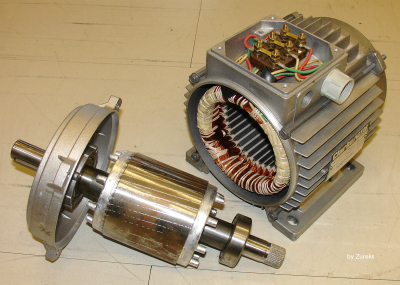
That was all just introduction. The star of this article is the transformer. Along with the generators that supply the power grid, transformers are key to power distribution. In a transformer, electric current passes through coils of wire wrapped around a magnetically “permeable” material (called a core), where it produces a changing magnetic field in that core. Rather than using that magnetic field to cause motion, like a motor, it passes through another coil of wire where it induces an electric current. The benefit of this arrangement is that by having a different number of turns in the “primary” coil and the “secondary” coil, the voltage can be changed up or down. As I discussed briefly in “What is Split-Phase Power,” more voltage means getting more done with less current. For long-distance power transmission, less current means thinner wires. So, with transformers, voltage from a generator can be raised to much higher voltages for long-distance transmission, then lowered to safer household levels for use.
This brings me to the current transformer, or CT. The physics of transformers doesn’t require the coil of wire to be tight. By passing a current-carrying wire through the center of a ring-shaped magnetic core, and winding that core with a long coil of wire, we effectively create a transformer! The wire passing through the core acts as a single turn of wire for our purposes, and the magnetic field its current produces is guided by the core through that secondary coil. In a CT, the secondary coil is wound many times. In the Sense CT, it has 3,000 turns. Due to the ratio of coils between the secondary and primary, the secondary will always carry 1/3,000 the current of the primary. When a Sense CT is placed around your home’s main wires, at their full current capacity of 200 amps, only 67 milliamps will flow in each CT — a very manageable current! We can measure that much more easily than if we were to measure the full 200 amps directly.
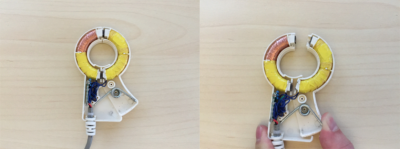
To me, the most important benefit of measuring current indirectly is the ease of installation. The core of the CT can be split into two parts for installation, and clamped together for measurement. That means that instead of disconnecting a home’s main wires to pass them through CTs, the CTs can simply be clipped around those wires without ever disconnecting them. This is important for a safe installation, because those mains are always live, even when the main breaker is shut off.
As always, it’s been fun to dive into the physics underlying Sense’s operation, and how we can make Sense installation simple and safe. Happy Sensing!
The post What is a Current Transformer? appeared first on Sense.
]]>