The post Next-Gen Smart Meters Have Arrived. Why That’s A Good Thing. appeared first on Sense.
]]>The data they provide is not as detailed as hoped. They can’t tell customers how much energy they’re using at the moment or how it’s being used within the home. Any data or insight comes after energy has already been used, so no immediate action can be taken to reduce energy usage.
First-generation smart meters are a misnomer that makes the introduction of truly “smart” meters more challenging. But the new generation of smart meters actually live up to the name. With them, customers finally have access to real-time energy data to make their homes smarter and more energy efficient.
Next-generation smart meters are poised to modernize the grid
Given their importance in the energy transition, it’s time we thought of electricity meters as more than a digital billing device.
We know that in order to electrify everything, we’re going to need smart tools to help balance an evolving energy supply and growing demand, while also managing the transition from aging to newer infrastructure.
Next-generation smart meters are capable of so much more than calculating our home energy usage. They can balance resources, including integrating DERs (Distributed Energy Resources) like rooftop solar, battery storage, or solar microgrids that will play a major role in the energy transition.
As demand grows through the adoption of heat pumps, electric vehicles, and electrification in general, utilities will be able to defer higher-priced upgrades to the grid by using these smart meters to effectively predict and respond to demand.
Sense-enabled electric meters will also help utilities automate and improve grid health. By being able to detect and respond to issues between the distribution network and energy consumers, they can increase reliability and decrease downtime when something goes wrong.
Next-generation smart meters will empower consumers with real-time data on the energy they’re using so they can improve their home’s energy efficiency. Real-time data happens in a second or less, which allows consumers and utilities to make changes to optimize energy use in the moment, not on a delay when it’s less likely to have the same impact.
With the use of AI, Sense-enabled smart meters will be able to measure how much energy individual devices in the home are consuming at any given time from dishwashers to heat pumps to EVs. This technology will also help identify grid restraints and power anomalies, like tree branches affecting distribution lines.
New, important consumer benefits
With their upgraded capabilities, Sense-enabled smart meters offer a host of benefits for consumers.
They can connect to residents’ home Wi-Fi networks to deliver real-time data about their energy usage through the Sense Home app. That real-time data is necessary for understanding not only how much energy consumers use, but which appliances are using the most energy and when.
When users understand how and when their homes use electricity, they can reduce their energy use and time certain power loads for when electricity is cheapest if they’re on a Time-of-Use (TOU) rate plan. This could look like shifting electric vehicle charging to the early morning to save on their electricity bill, help reduce demand during peak hours, and take advantage of plentiful green energy.
During times of heavy demand, local governments, utilities, or third-party demand response services can ask residents to reduce their load. Real-time data, and visibility to it through the Sense Home app, helps consumers to determine which loads can be shed to meet the request.
By giving both utilities and consumers access to detailed, real-time data, next-generation smart meters are a major step forward in the energy transition.
Next-generation smart meters are here
Large infrastructure changes like this take time. New investments require regulatory approval and utilities have to be able to justify major investments. In most cases, existing smart meters and their supporting infrastructure like communications networks will need to come to the end of their lives before a utility can make the case for replacing them.
But next-generation smart meters are being installed now. New York state began rolling them out last fall and will have more than 500,000 in operation by the end of 2024. Other states, including Massachusetts, are set to follow with their own installations in 2025.
By 2030, Sense projects that 20 million Sense-enabled smart meters will be installed around the country. Through empowering consumers and utilities with real-time, actionable data, their installation will pave the way for a smarter, cleaner energy future.
The post Next-Gen Smart Meters Have Arrived. Why That’s A Good Thing. appeared first on Sense.
]]>The post How Do Smart Meters Work? appeared first on Sense.
]]>Before the introduction of smart utility meters in the 1970s, utilities figured out how much to bill you with the help of analog utility meters. Meters were located on the wall outside your home, normally through the wall from your electric panel, and where your gas enters your home, usually in front of your house facing the street. The flow of electricity into the utility meter turned small gears, which measured how much electricity flowed into your house as you turned appliances on and off. A utility company employee stopped by on a monthly or bi-monthly basis to read the utility meter so that your charges would be fairly accurate over time.
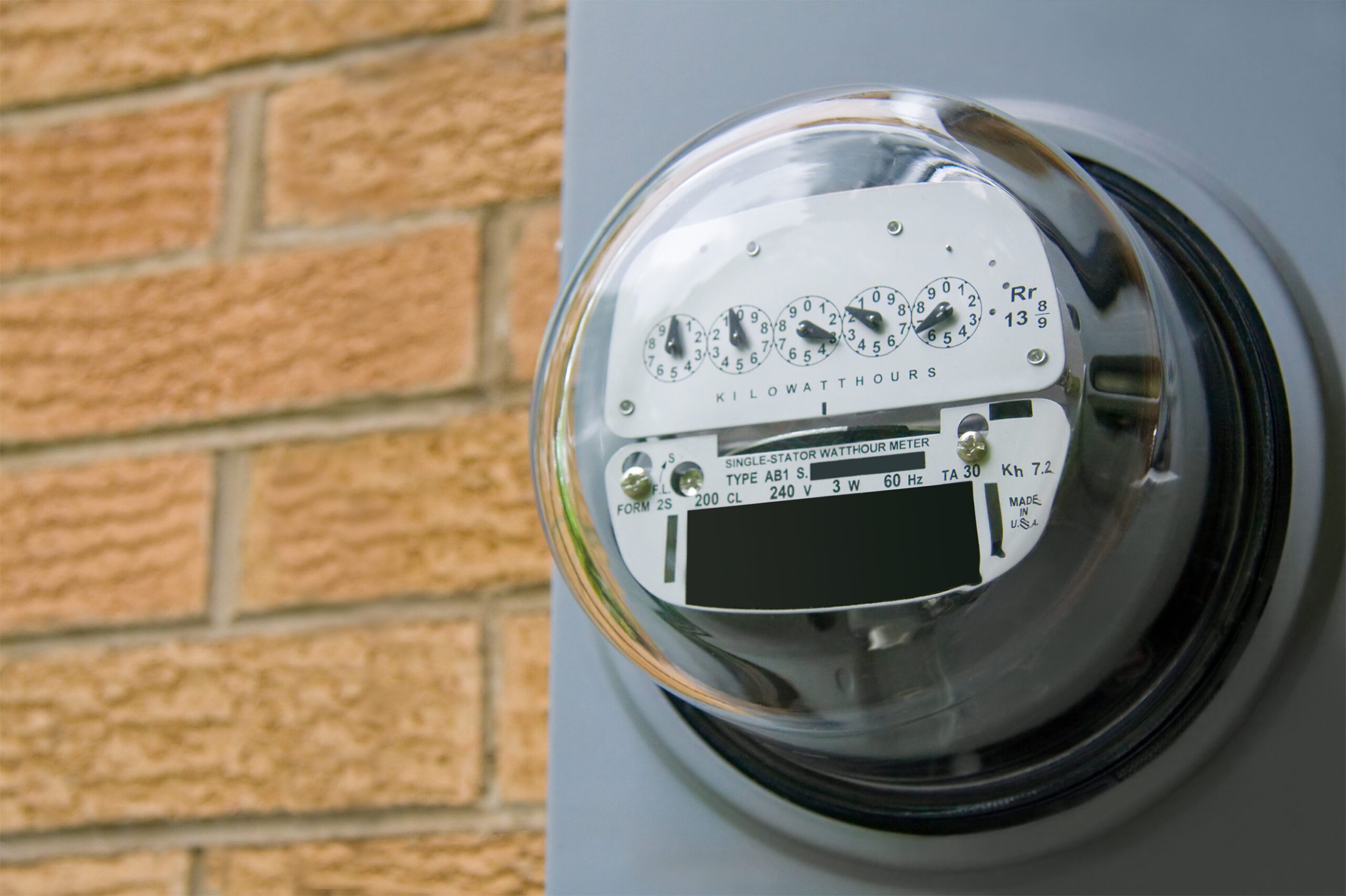
In today’s digital age, smart utility meters measure your gas and electric usage but they go a step further by gathering more detailed data and communicating directly with your utility. Like old style meters, smart meters are made of glass and give you a real-time display of the kWh (electric) and Therms—a Therm is equivalent to 100,000 Btu, 29 kWh, and one hundred cubic feet of natural gas—you are using over time, a snapshot of your current energy use.
Since your home’s energy data is sent digitally to the utility, no one has to come and read them manually, which saves many hours of labor. Smart meters communicate by using radio frequency transmitters that transmit data through secure networks to your utility rather than connecting to your household W-Fi network or to the Internet. Because the data is digital, your utility can analyze it and share some basic insights. For instance, you can go to the utility’s website to see the history of your energy use and compare your usage with that of your neighbors in similar-sized homes with the same number of people.
Your gas meter communicates with your utility in a similar way, through secure networks. The latest devices use ultrasonic metering in real time to keep track of your gas use, and can perform self diagnostics. For example, if your gas use rises rapidly it may indicate a dangerous gas leak.
Today’s smart meters have somewhat limited data capabilities. Although the data is gathered continuously, it’s batched up and transmitted to the utility’s servers on a delayed basis. As a result, if you check into your online utility account, you can typically see your home’s energy consumption yesterday but not today’s data. Still this is a big improvement over a monthly paper bill.
Utility companies analyze your data and make it available to you in raw form or in the form of a bar graph comparing your energy use over time or comparing your use to others. You’ll be able to tell how you’re doing based on the smiling, neutral, or happy face on your bills.
Advanced smart meters that are compatible with the Sense Home app go to the next level by providing you with real-time data, similar to having the Sense Home Energy Monitor installed in your electrical panel. Sense-capable smart meters will soon be deployed to some utility customers in New York and Massachusetts
Smart Meters and Time of Use Rates
With more extreme weather due to climate change, and the use of more renewable energy sources on the grid, utilities are coping with bigger peaks in energy demand that don’t always coincide with the cleanest energy sources, so they’re looking for ways to influence when customers use energy. For instance, some utilities have Time of Use (TOU) rates. You get charged more during peak energy use times and less during off-peak, to prompt you to use less energy during peaks. Turning down your air conditioning during a peak event can save you energy and money while helping the utility meet its demands for electricity.
What if those adjustments could be made automatically instead? Smart meters allow your household to participate in voluntary energy efficiency and peak-load shaving programs that, for example, allow your utility to raise the air conditioning set point during peak energy use during summer afternoons and evenings and to nudge your thermostat to save you money and energy at night or when you are away. In this case, you must allow the utility permission to communicate with your thermostat via your smart meter and make small adjustments to your temperature settings.
We all have some skin in the game. For example, shaving off energy use at home saves you money and helps the utility minimize the use of expensive and dirty “peaker plants” that act as a reserve when the grid is close to being overwhelmed with demand and extra sources are needed.
Energy Savings Through Demand Response Programs
In many states, utilities can aggregate thousands of household appliances for demand response programs. In California and New York, for instance, regulations require that residential water heaters be manufactured with hardware and software capabilities to moderate their energy use in response to incentive payments or changes in the price of electricity. Major manufacturers like Rheem already offer several models of demand-response-ready water heaters.
Through these programs, utilities can adjust residential water heaters to decrease winter and summer peaks. Reducing the load for each home across the utility district means that individuals will experience small changes but the whole system benefits. To avoid snapback events–a surge in demand when all the water heaters return to their normal settings–utilities stagger demand response times across their customer base.
Most demand response programs are geared towards electricity use and not gas use. However, that may change since the potential is significant, even though natural gas use is declining in the effort to move to cleaner energy sources.
Smart Meter Myths
With new regulations to save energy more widely, and the adoption of innovative smart meter technology, utilities are working to educate consumers, explain the benefits of their energy efficiency and energy conservation programs, and allay some fears.
For instance, you can always opt out of a utility’s smart meter program, but it may cost you extra to revert to old fashioned, manual data collection. Your data is sent from the smart meter over secure dedicated networks, not through home Wi-Fi or the internet, so your data is relatively safe. There are no demonstrated health impacts from radio transmissions from your smart meter. You will have much less exposure to radio frequency waves than you would from a cell phone.
Smart meters are more accurate than the old mechanical meters, so you are only charged for the energy you use. Some people have experienced an increase in energy use after switching to a smart meter, especially if the meter they are replacing is very old. It’s possible your old meter slowed with old age and was not keeping up with your actual energy consumption.
Weather is variable, making it hard to tell if an increase in your utility bill after a smart meter replacement has been triggered by hot spells or cold snaps. If you see a big change, you should also check to see if the utility has changed its rates and started charging higher energy costs per kWh or Therm. Of course, you can also use the Sense monitor and app to see if your energy usage changes before and after a smart meter is installed.
Keeping Customer Data Private
On the privacy front, the rules and regulations that govern utility data security are not uniform since utility regulations differ depending on your state and whether you live in Europe or North America. People have legitimate concerns about how their personal and household data is used. But some general principles are being widely adopted by utilities and their regulators:
- Transparency so that utilities explain to consumers how their data will be used.
- Individual consent to how data is collected, used and shared.
- Minimal data collection, collecting only what’s needed for given program goals.
- Data is used only for the purposes advertised.
Provisions for customers to contest inaccurate energy use. - Data security is required.
- Third party certification and authorization, such as that provided by state utility commissions.
In the larger context of climate change, smart meters have an important role to play, helping you to partner with your utility to conserve energy, take advantage of clean energy sources and have a reliable power supply from the grid.
The post How Do Smart Meters Work? appeared first on Sense.
]]>The post Sense: Beyond What Your Utility Tells You appeared first on Sense.
]]>You may be using smart meter data from your utility to track your energy usage. Maybe you’ve wondered how using Sense is different. In this article, we’ll explore how utility smart meters work. What does your utility know about your home’s energy usage and what are they sharing with you? And what does Sense bring to the picture?
The basic analog/digital meter
The basic electric meter (think spinning disc or barebones digital readout) tracks energy usage, but has to be read manually by the utility company who sends a meter reader to physically look at it or estimates based on past usage. This is very expensive and time consuming for the utility, but the real issue is that consumers are only given insight at the month level. This lack of granularity means homeowners have little to no idea how to reduce their energy usage (short of simply not using electricity). Eventually there came a better way: the “smart meter.”
The smart meter
These meters function like basic analog or digital meters in that they measure how much power is being used at the whole-home level. The main distinction is that they are able to communicate wirelessly with the utility provider via radio frequency (RF). This offers several advantages to the utility:
- Eliminates the need to manually read meters
- Provides more accurate billing through improved meter accuracy
- Allows the utility to better predict and balance electric loads and generation
- Enables dynamic pricing based on electricity demand
In some cases, smart meter data can be made available to the homeowner through a utility company’s website or app, and can provide some insight into how much energy is being used, oftentimes at the daily or hourly level, but sometimes even down to the minute. This can be helpful when you’re trying to learn more about your electrical usage than a simple bill at the end of the month can provide. But, while they’re an improvement over traditional meters, even the most advanced smart meters still have some limitations:
- Not real time. Even for the smart meters that provide minute-level insights, this granularity can only get you so far. You’ll be able to see what used power minutes ago, but you won’t see your usage in real time. A more helpful reading would show instantaneous total-usage readings, so you can turn on a light or your hair dryer and see exactly how much power it’s using right away. You can’t manage what you can’t measure!
- Data access. Smart meters belong to your utility company, and so does the data they generate. Some utilities provide access, but not without a few hurdles. While more utilities are beginning to offer customers mobile and web apps to view usage, the data is limited by the resolution of the meter, and how the meter transmits that data through to the apps, and the app’s design may not be user-friendly enough to provide real value.
The “smarter” meter
There is a smarter solution for your home’s energy: Sense. Like an electric meter, Sense monitors the energy use of your entire home. But it goes further, providing real-time energy insights by measuring electrical usage 1 million times per second. Sense then uses this data to “disaggregate” your energy usage to identify individual devices. It creates this intelligence by “listening” to the unique electrical signatures of the devices plugged into your home. You can learn more about how it works here.
Sense fills a gap in understanding how our homes use energy, and it works on the premise that data should help people reduce their energy use and thus their energy costs. Because of its real-time capabilities, you can monitor your usage in real time on the Sense Home app, seeing exactly how much power a device is using. Turn the TV or a light on and you can see how much energy you’re using, instantly, right on the Power Meter. With this understanding, you can:
- Identify energy hogs and reduce them
- Track usage over time
- Optimize solar power use
- Spot malfunctioning equipment
- Optimize your usage in relation to peak times, for those with demand pricing plans
You can also see, at a glance, your total second-by-second usage and understand this usage estimates in dollars so you can determine potential cost savings if you were to change how you use a device. Maybe that pool pump doesn’t need to run 24/7? Maybe you should upgrade that ailing fridge? The app makes it convenient to track these costs by day, week, month, or billing cycle so you have thorough insight to make better decisions.
Something users find helpful is being able to track historical usage — all the way back to the day Sense was installed — to understand consumption trends and visualize conservation progress. You can even set goals within the app and get real-time notifications when you achieve them. Notifications can also help you keep track of key usage milestones and get warnings if Sense detects a potentially dangerous situation, like an oven that’s been left on too long, or a refrigerator that hasn’t cycled on in a while.
The Sense Home app also helps users identify their “Always On” loads. Also referred to as “vampire loads,” these are the devices that continuously draw some amount of power, even when not in use. Examples are products with integrated clocks (microwaves, coffeemakers) or those devices that go into sleep or standby mode instead of being completely powered down (TVs, Cable box/DVRs, PCs). How much can these small amounts can really add up to? A study by the Natural Resources Defense Council found that the energy use from Always On devices across the US accounts for 23% of power consumption in the average household, or about a quarter of any given electricity bill. Our own research confirms this. By using the Sense Home app, you can see how much your Always On load is costing you and take steps to figure out what the culprits might be.
Smart home + smart energy
Sense doesn’t just monitor your energy use, it also plays nice with a range of other smart products like Amazon Alexa, Philips Hue, and smart plugs from TP-Link and Belkin Wemo for instant detection and remote device control. If your home has solar power, Sense can integrate with it so you can see usage and solar production all in one place, helping you to plan your consumption for when your solar is at peak production. And if you want to geek out with solar data, or any other usage data, you can easily export it via the Sense web app. These are tools that amplify your ability to save energy, an area where a typical smart meter just can’t compete. Sense also benefits from active user groups, like the Sense Community and Sense Saves, where users share how they’re leveraging their data for savings.
While some smart meters and utility apps can tell you the amount of energy you’re using hour-by-hour and sometimes even minute-by-minute, that answer may not be detailed enough to guide real conservation efforts. It comes down to data: Do you want to know how much one device is using over another? Will your utility provide instant readings when you turn a device on or off? Can you track consumption over time? Can your utility help you get more value from your other devices, like smart bulbs and smart plugs? Can you get alerts when your bill reaches a certain threshold or when a device has been left on for too long? Sense provides these energy consumption insights, and more.
While the Sense Home Energy Monitor is, at present, the best option for granular energy insights, the future looks bright. We recently announced a partnership with Landis+Gyr, a world leader in electrical infrastructure, to integrate the Sense Home app with their advanced meter hardware.
Get Sense to start making smarter decisions about the energy you’re paying for.
The post Sense: Beyond What Your Utility Tells You appeared first on Sense.
]]>