The post Look Both Ways: Why We Shouldn’t See Sides of the Meter appeared first on Sense.
]]>We have moved into a world where the intersection between the grid and homes has blurred, with vast amounts of power and data able to move across the boundary. New challenges need new responses, and next-generation AMI 2.0 smart meters have emerged to allow us to look both ways between the grid and households.
The sides of the meter
Utilities have historically viewed each side of the meter as clearly defined and separate features of the energy system. The grid side, or front of the meter, covers everything from the cables in the ground to the lines overhead. Transformers, distribution feeders, and anything else used to carry electricity to and, in some cases, from customers is traditionally a network operator’s bread and butter.
The consumer side behind the meter has sat firmly apart from the grid. Anything plugged in at home–from a hairdryer to a heat pump–has been the responsibility of the owner or sometimes a third-party service provider to maintain and control.
First-generation smart meters (AMI 1.0) have done little to change this dynamic. They have been largely successful over the last two decades in eliminating manual meter readings but are little more than simple data collection devices. By checking power measurements every 15 minutes and sending this data to the utility 24 hours or more later, their position at the grid edge is underutilized. But that’s all changing now with AMI 2.0 smart meters.
How data has changed the game
Smart meters available today are capable of sampling voltage and current waveforms up to one million times per second (1MHz). That’s 50 million times more data processing than first-generation smart meters. Even at 15,000 times a second (15kHz), AMI 2.0 technology makes it possible to identify unique signals from specific devices, almost like electrical fingerprints, to see how they are behaving in real time.
The scale of this data is too vast to be transmitted in bulk to a centralized cloud location to be used in your decision-making. Partners like Sense can make use of AMI 2.0’s memory storage and powerful processors to embed high-resolution sensing and edge computing into the meter to analyze the data in an instant. The ability to connect to WiFi and/or cellular networks adds real-time networking, enabling them to deliver real-time, actionable insights.
These capabilities may seem fixed on the consumer side, but they stretch out so much further. The same high-resolution data, combined with Sense’s grid-edge AI computing, can be used in the other direction to provide a detailed bird’s eye view of what’s happening on the system, transforming how you can manage it.
Looking both ways
AMI 2.0 allows smart meters to live up to the potential of their position at the intersection between grid and consumers. Suddenly thousands of smart meters can form distributed sensing, compute and control platforms fit for the modern grid.
Just as Google Maps uses the speeds of vehicles connected to the app to identify traffic problems, an AMI 2.0 meter equipped with Sense technology can detect unusual power fluctuations or outages and instantly report them to you. This can range from device-level consumption behind the meter to subtle anomalies caused by singular transformer arcs or vegetation brushes on lines.
Far from just telling you what’s happening on the grid, this real-time grid visibility can help you make smarter decisions for the future. Investment can be directed where it’s needed most to respond to increased DER capacity. Use of existing transformer and distribution assets can be maximized in place of costly infrastructure upgrades, keeping costs low for customers.
The holistic view offered by AMI 2.0 data and edge processing delivers grid optimization potential like never before.
A unified future without boundaries
With AMI 2.0 smart meters supported by embedded intelligence, you no longer need to view the grid in binary terms–the sides of the meter disappear. This technological leap forward means you can see and influence how energy is used in homes and buildings while simultaneously monitoring power flows across the grid.
Decisions need to be made today to capture this potential, with large-scale meter replacements already underway worldwide. AMI 2.0 can use edge-computing software to adapt over time and accommodate the consumer-driven transition to smart homes while receiving the remote updates needed to support an evolving energy landscape–all without replacing the hardware.
In a world in which power and data flows both ways, we cannot continue to function with legacy thinking. The long-term and unparalleled grid visibility offered by AMI 2.0 with embedded intelligence breaks down the barrier between grid operations and consumer energy use, creating a unified, responsive energy ecosystem.
Key terms
Advanced Metering Infrastructure (AMI): an integrated system of smart meters, communications networks, and data management systems that enables two-way
communication between utilities and customers. The first generation of AMI technology sampled electricity use every 15 minutes, replacing the need for manual meter readings.
AMI 2.0: the next-generation smart meters deliver connected networks of intelligent edge-computing devices fully equipped with onboard sensors, computers, and communications capabilities. They sample and measure voltage and current waveforms at least 15,000 times a second (15kHz) and use advanced processing capabilities to analyze and identify subtle fluctuations at the grid edge. Strong networking capability allows both real-time data and alerts to be sent to consumers and utilities with low latency.
Behind the meter: any device or resource on the customer’s side of the electricity meter–home appliances, solar panels or other generation, battery storage and electric vehicles–that traditionally has fallen under their control.
Distributed energy resources (DERs): any resource located on the distribution system or behind a customer meter, such as electric storage resources, distributed generation like solar farms, demand response, thermal storage, and electric vehicles and their supply equipment.
Embedded intelligence: AI and machine learning algorithms integrated directly into AMI 2.0 smart meters enable advanced analytical processing to be carried out in real-time using high-resolution data from the grid edge. This intelligent capability can be used to detect the behaviour of individual appliances, usage patterns, and flag grid anomalies without transmitting raw data in bulk to the cloud.
Front of the meter: infrastructure, assets, or devices outside the customer’s meter that constitute the grid such as distribution network elements, feeders, transformers, grid-scale generation and energy storage.
Grid edge: the boundary area of the electrical system where the utility and end users meet at the smart meter.
Grid optimization: the intelligent management and coordination of grid resources to maximize efficiency, minimize costs, reduce peak demand, and seamlessly integrate distributed energy resources while maintaining system reliability and power quality.
Grid resilience: the electric grid’s ability to withstand, adapt to, and rapidly recover from extreme weather events, equipment failures, and other disruptive forces while maintaining reliable power delivery to customers.
Grid visibility: the comprehensive, real-time monitoring and understanding of electrical grid conditions from the distribution level down to individual households. It encompasses the ability to observe, analyze, and respond to grid conditions across the entire network infrastructure.
The post Look Both Ways: Why We Shouldn’t See Sides of the Meter appeared first on Sense.
]]>The post EV充電が電力網を変える- 日本の電力会社が先手を打つには appeared first on Sense.
]]>電気自動車(EV)の普及は、電力会社が電力網を考える際の視点を大きく変えつつあります。これは、家庭内の電気メーターだけでなく、グリッドエッジにも影響を与えています。
日本が2050年までにネットゼロ(カーボンニュートラル)の達成に向けて、あらゆる分野の電化が加速する中、EVはその鍵を握る存在であると同時に、課題も増えてきています。2035年までに新車販売の100%をEVまたはハイブリッド車にするという目標は、家庭の電力需要を大きく押し上げるでしょう。多くのEV充電は家庭で行われ、電力負荷は大きく、かつ柔軟に制御できるという特徴があります。
適切な技術を導入することで、日本の電力会社はこの柔軟性を利用して、グリッド計画、システムの安定性、そして顧客とのエンゲージメントといった付加価値を創出することができます。
その第一歩は、「可視化」です。
Sense EV Analytics:グリッドエッジでのリアルタイムEVインテリジェンス
Sense EV Analyticsは、スマートメーターに組み込まれたAIを用いて、車種や充電器の種類に関係なく、家庭におけるEV充電を検出・分析します。高解像度の波形データをメーター内で処理することで、EVが「いつ・どこで・どれだけ」充電されているかをリアルタイムで把握できます。
この知見データにより、トランスフォーマー(変圧器)レベルでの計画から需要応答、炭素排出量の削減まで、よりスマートな意思決定を可能にします。
日本の電力会社にとって、なぜ重要なのか
EVの普及と家庭へのインパクト
日本は2030年までに600万台のEVの普及を目指しています。この場合、集中管理されている急速充電器のようなインフラとは異なり、充電の多くが家庭に集中することになります。家庭での充電が把握できなければ、需要予測やトランスフォーマー(変圧器)の負荷管理、需要応答プログラムの実施が困難になります。
メーターのインテリジェンスを活用した家庭での充電 Senseはレベル1とレベル2の充電の開始時間と停止時間を分単位で検出し、5分単位のkW負荷データを取得します。これにより以下のことが可能になります。
- グリッドエッジでのEV検出
- トランスフォーマー(変圧器)やフィーダー(送電線)単位での負荷を可視化
- 予測精度の向上とDER(分散型エネルギー資源)の統合
クラウドでの推測ではなく、グリッドエッジのAIを活用
遅延を伴う15〜30分間隔のデータに依存するクラウドベースのソリューションに対し、Senseはスマホのようにスマートメーターでデータ処理を行います。これにより、以下のことが可能になります。
- クラウドサービスやネットワークコストが不要
- 遅延ゼロのリアルタイム検出
- 追加のハードウェアやセンサーなしでスケーラブルに展開
Sense EV Analyticsで実現できること
- EVのスケーラブルな可視化: EVのメーカー、モデル、充電器を問わず、あらゆる充電を検出し、テレマティクスやスマートプラグ、オプトイン(事前の同意)が不要
- プログラムコストの削減:レベル1の充電器を使用する顧客を特定してサービスを提供し、より少ない経費でより多くの世帯にリーチ
- クリーンで柔軟な充電:ピーク時間帯を避け、再生可能エネルギーが豊富な時間に充電をシフトすることで、電力網の信頼性向上と炭素排出削減を同時に実現
- ユーザーエンゲージメントと需要形成: Senseアプリを通じて、家庭ごとの電力使用、利用料金、充電行動におけるリアルタイムの知見データを取得することができ、効果的で良心的なTOU(時間帯別料金)の導入とエネルギーの効率化を実現
なぜ「今」なのか?
EV充電は家庭の電力需要を倍増させる可能性があります。一方で、これは「調整、管理が可能な電気負荷」でもあります。日本の住宅用のフィーダー(送電線)は、ピーク需要の多様性が低いため、管理されていないEVの普及は、地域的な制約を引き起こすリスクがあります。Sense EV Analyticsは、以下の特長により、このような状況の変化に先手を打つことができるソリューションです。
- EVのタイムリーな検出
- 日々の充電負荷に関する知見データ
- 顧客プログラム登録の効率的な仕組み
- 配電ごとのストレス指標
低炭素社会に向けた、よりスマートな充電へ
単にピーク時間帯を避けるだけでは不十分です。TOU料金と再エネ発電や炭素強度は必ずしも一致しません。
Senseは、地域や状況に応じた「動的」な充電シフトを可能にし、家庭が最も「安く・クリーンで・供給豊富」な時間帯に充電できるようサポートします。
日本のスマートメーターの未来に対応
Senseのソフトウェアは、次世代スマートメーター(AMI 2.0)に対応し、セルラー、Wi-Fi、メッシュなど複数の通信プロトコルをサポートしています。高解像度波形解析と日本独自の電気負荷への対応も進行中で、日本全国へのAMIの普及を視野に入れています。
EV充電を柔軟でグリッドに優しいリソースへ – その出発点は、スマートメーターです。
The post EV充電が電力網を変える- 日本の電力会社が先手を打つには appeared first on Sense.
]]>The post Smarter Charging Through Partnership appeared first on Sense.
]]>By embedding Enode’s API into the Sense Home app, we’re extending our real-time visibility in the home to the EV itself, capturing live data streams like battery status, charge rate, and usage trends across 45 brands and over 365 models. This creates a unified layer of intelligence that enables more accurate load forecasting, targeted demand response, and seamless customer engagement at the grid edge.
We spoke with Nikolai Heum, CTO and co-founder of Enode, about the technology behind their API platform, the role of integration in grid modernization, and how this partnership unlocks smarter energy management for both EV drivers and utilities.
Q: What is Enode and what are the challenges that you’re focused on solving?
Enode provides the leading API platform for connecting energy devices like EVs, chargers, solar inverters, and batteries to digital apps and services. The biggest challenge we solve is fragmentation. Every device brand has its own way of sharing data and controls. Enode removes that complexity by providing one integration that works across hundreds of devices, so energy companies can focus on building products that accelerate electrification.
Q: What makes Enode’s approach to device integration so unique?
We combine breadth and depth. Our coverage spans over 1,000 models across 100+ manufacturers, and we don’t stop at connectivity. Enode provides real-time data and control capabilities that enable advanced use cases, from richer EV insights today to smart charging and solar-aware load shifting in the future.
Q: How did you first hear about Sense, and what made you decide to collaborate?
We’ve followed Sense for years as a pioneer in home energy intelligence. Their expertise in real-time energy monitoring aligns perfectly with our mission of making energy data actionable. Partnering was a natural step. Together we can bridge the gap between awareness and control, starting with EV drivers.
Q: How does Enode’s technology work with the Sense user experience?
Sense gives households visibility into how energy is used at home. By integrating Enode’s API, that visibility now extends to EVs. Sense users can see real-time EV data like battery status, charge rate, and charging activity directly in their app. Over time, this data also creates the foundation for new features like smart charging.
Q: How will this partnership benefit EV drivers that use the Sense mobile app?
EV drivers will get richer insights into their charging, including battery status and the ability to distinguish between multiple EVs in the home. That makes EV ownership simpler and more transparent.
Q: How do utilities benefit from the adoption of Enode’s technology by companies like Sense?
Utilities gain access to aggregated, flexible load at the grid edge. Through partners like Sense, Enode enables utilities to integrate EVs and other devices into demand response programs, time-of-use pricing, and broader grid management efforts. The result is a grid that’s more reliable and resilient.
Q: How can Enode’s technology help address the challenges faced by the grid due to growing EV adoption?
Unmanaged charging can put serious strain on the grid during peak hours. Enode enables EV data and controls to be integrated into digital services at scale, creating the foundation for smart charging that shifts demand to times when the grid is less stressed or renewable energy is abundant. That helps lower emissions, reduce costs, and limit the need for expensive grid upgrades.
Q: What other types of DERs does Enode support? What use cases for device integration excite you the most beyond EVs?
Beyond EVs, Enode connects to solar inverters, home batteries, and heat pumps. The most exciting opportunities come from combining them. For example, charging an EV directly from rooftop solar or discharging a home battery to reduce peak demand. The more devices we connect, the more value we can unlock for consumers, utilities, and the grid.
Nikolai Heum is the Co-Founder and CTO of Enode. He defines the company’s long-term technology roadmap and drives Enode’s mission to accelerate the transition to a sustainable energy system by connecting and optimizing the world’s energy devices. Before Enode, Nikolai joined Monio as engineer number two, where he helped build the company through to its exit, and has since invested in and advised several Nordic startups.
The post Smarter Charging Through Partnership appeared first on Sense.
]]>The post Your Meter Should Be As Smart As Your Phone appeared first on Sense.
]]>
Traditional meters have been stuck in the slow lane, typically operating on past data collected every 15 minutes to offer a fuzzy snapshot of what’s happening across the grid. Today, next-generation AMI 2.0 technology is making the same leap your smartphone has.
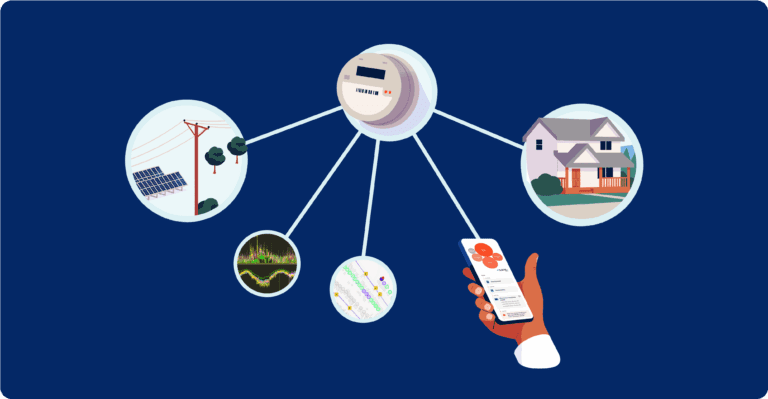
With embedded intelligence enabled by partners like Sense, 50 million times as much data as first-generation smart meters can be processed at the grid edge. AMI 2.0 meters tap into the same computing power that allows smartphones to process the high data rates they need to. And by connecting to home WiFi, they can deliver real-time actionable insights.
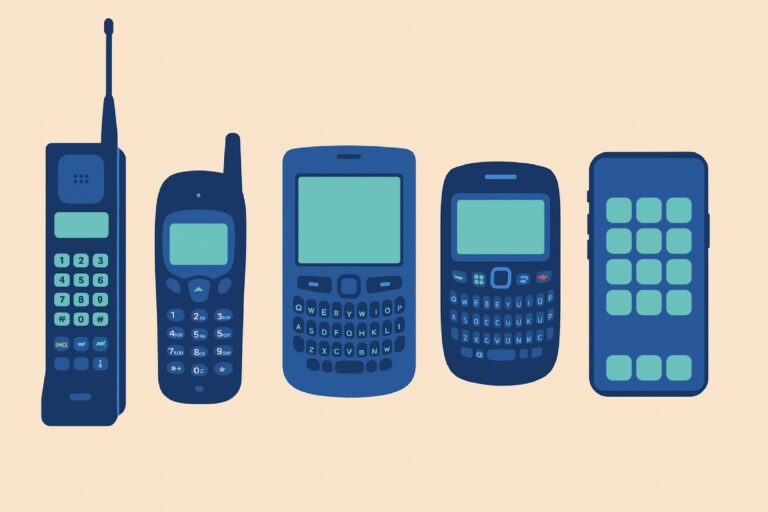
The result is that a meter now has the capabilities to be as smart, adaptable and beneficial as your smartphone. Moving to AMI 2.0 technology is like swapping out your Nokia 8210 for an iPhone.
Unleashing the energy transition
This could not come at a better time for utilities. Electricity demand is surging across the US as data centers, electric vehicles, and other demand sources are rolled out to match the needs of our modern society. At the same time the intermittency of clean, distributed energy resources calls for new approaches to grid management.
Distribution grids are not ready for this energy transition. More wires, power plants and other hardware aren’t enough to get us where we need to go. New solutions to reach consumers and deliver greater grid-edge visibility and control are needed more than ever. Thankfully, next-gen smart meter technology is here today.
AMI 2.0 technology offers the scalable and powerful network we need to unleash the energy transition affordably and effectively. Sense’s AI technology sits within these meters at the grid edge to deliver in-home intelligence in real time. For utilities this capability offers a detailed bird’s eye view of what’s happening on the system, transforming how it can be managed.
Crowdsourcing grid management
Apps like Google Maps have revolutionized how we travel in cars by crowdsourcing real-time data to provide drivers with insights on their journey. AMI 2.0 can do the same for utilities. Just like when Google Maps uses the speeds of vehicles connected to the app to identify traffic problems, a meter equipped with technology like that provided by Sense can detect unusual power fluctuations or outages and instantly report them to you. But that’s just the start.
The in-home device provides utilities with a direct line to households. Where Google Maps helps drivers avoid traffic or find the cheapest gas stations, you can use AMI 2.0 meters to alert consumers of changes in grid conditions or real-time pricing. The result is a community of users running appliances or charging EVs when prices are lowest and at times that work best for the grid.
The two-way relationship creates a whole new dynamic between consumers and utilities—one that’s interactive, responsive, and truly smart.
A grid-scale health check
AI-enabled AMI 2.0 meters let homeowners and utilities alike carry out a smart home health check on devices and how they interact with the grid. Where health apps like Oura might track your heart rate or sleep patterns, Sense uses AMI 2.0 to monitor energy-hungry devices to detect and warn you about any changes in a home’s energy consumption patterns.
The embedded intelligence within AMI 2.0 meters can analyse energy consumption up to one million times a second to detect the difference between a heat pump and a hairdryer. Apply this capability across a grid and we can transform our relationship with energy in the same way that personalized health monitoring has reshaped wellness.
The time is now!
Decisions need to be made today to take advantage of this potential, with nearly a quarter of meters in the US due to be replaced by 2030. The energy transition will happen during the lifespan of meters being installed now.
AMI 2.0 meters installed today can be updated remotely to evolve and address tomorrow’s energy challenges. Many electric vehicle drivers have experienced the value of remote updates that improve range, add new features, or optimize performance years after the vehicle first took to the road. The same is true for AMI 2.0 smart meters with embedded intelligence. They continue to grow in value and functionality long after installation.
Everyone benefits from lower costs and a more flexible grid fit for a cleaner future. Adopting AI-ready AMI 2.0 smart meters delivers the platform on which technology like that provided by Sense can deliver these system benefits for all of us.
The post Your Meter Should Be As Smart As Your Phone appeared first on Sense.
]]>The post EV Charging Is Changing the Grid. Here’s How to Get Ahead appeared first on Sense.
]]>The rapid rise of electric vehicles is reshaping the way we think about the grid—from both sides of the meter. As utilities work to meet ambitious climate mandates while keeping systems resilient and affordable, EVs are emerging as both a challenge and an opportunity.
According to the US Department of Energy, around 80% of EV charging happens at home. That’s good news because unlike most home energy loads, EV charging is highly flexible. With the right tools, utilities can turn this flexibility into real-world value: for the grid, for the environment, and for customers.
But it all starts with visibility. That’s where Sense EV Analytics comes in.
Meet Sense EV Analytics: Smarter EV Intelligence From the Grid Edge
EV Analytics leverages Sense’s distributed edge intelligence to detect and analyze home EV charging regardless of vehicle make or charger type. By applying AI and machine learning to high-resolution waveform data, EV Analytics gives utilities unprecedented clarity into when, where, and how much EVs are charging.
And that clarity enables action.
Sense identifies Level 1 and Level 2 charging events with minute-by-minute start/stop timestamps and 5-minute kW load data. This information feeds directly into key utility operations—from managed charging and distribution planning to load forecasting and customer engagement.
- Detect Charging at the Grid Edge
Leverage meter-embedded AI that analyzes high-resolution waveform data—eliminating the blind spots and delays of cloud-only or 15-minute interval data approaches. - Lower Program Costs and Expand Access
Recruit and enroll more customers into managed charging programs with new options for EVs using Level 1 chargers. One solution, broad coverage, lower acquisition costs. - Support All EVs and Chargers
Deliver EV insights regardless of make, model, or charger. Sense’s waveform-based detection is vehicle and charger agnostic—removing the enrollment friction created by telematics or proprietary hardware. - Adapt to the Fast-Changing Grid
As new EVs are added to the grid every day, Sense keeps pace offering continuous detection and insights to help you adapt your planning and operations in real time. - Build a Flexible, Scalable Foundation
Support multiple meter communication protocols (Cellular, Mesh, WiFi) and integrate seamlessly with utility platforms. Sense enables a software-first strategy that’s ready to scale with your AMI 2.0 rollout. - Unlock Dispatchable Load
EV charging is flexible and Sense helps you tap into that flexibility. Shift load to off-peak hours with real-time visibility that enables smarter demand response and grid reliability strategies.
Why Grid-Edge Matters
Today, most utilities rely on a patchwork of EV data sources—some delayed, some disconnected from actual meter locations, and many with significant data gaps. Further, most software approaches rely on cloud models that can’t keep up with the real-time grid. That makes planning difficult, and limits the success of managed charging programs.
EV Analytics changes that. By detecting when an EV is added to a home, utilities can immediately determine how that load will impact local distribution assets. And with identifying and measuring charge events directly at the meter, Sense delivers timely, accurate, and location-specific insights at scale—no extra hardware, no messy integrations.
Giving EV Drivers Power
Accurately identifying where EVs are from the edge also enables utilities to engage their owners. EV charging can double household energy demand, creating grid stress if unmanaged. While time-of-use (TOU) rates aim to shift charging to off-peak times, results are mixed—often due to limited customer engagement. Sense EV Analytics together with the Sense Home app can provide real-time alerts and visibility into when rates change and what’s using power.
But rates alone aren’t enough. Sense research shows that TOU periods often don’t align with the grid’s cleanest energy. Nor are they aligned with seasonal peaks, like AC-driven load increases during the hottest part of the day. Smarter charging needs to factor in renewable generation, real-time usage, and overall carbon intensity. This kind of optimization could cut emissions by up to 43%.
To make it work, we need home-level intelligence and consumer-friendly tools. With software embedded in smart meters and an easy-to-use app, Sense is uniquely positioned to enable flexible, low-carbon EV charging for a more resilient grid.
Shape EV Demand Before It Shapes Your Grid
EV sales are surging. According to the International Energy Agency (IEA), EVs grew to 10% of new U.S. car sales in 2024. By 2030, that number is forecasted to hit between 20% and 50%. That increase could add between 100TWh and 185TWh to our total electricity demand, representing between 2.5% to 4.6% of our total consumption.
That’s great for utilities under pressure to meet climate goals. But without the right strategy, it could mean up to an increase in peak energy demand—at a time when many grids are already under strain from weather events and rising consumption.
The good news: EV charging is flexible. With tools like Sense EV Analytics, utilities can shape demand—reducing peak load, improving grid reliability, and helping customers charge at times when energy is cleaner, cheaper, and more plentiful.
With Sense EV Analytics, utilities get:
- Reliable detection of all EV’s on the residential network to know when a new EV is added
- Daily EV charging data for improved forecasting
- Accurate charge detection to enroll more customers in managed charging
- Seamless integration with utility systems and customer apps
In a world where every kilowatt-hour matters, Sense provides the clarity to act and the tools to drive meaningful change.
Let’s unlock EVs as part of our cleaner, more resilient future—starting at the meter.
The post EV Charging Is Changing the Grid. Here’s How to Get Ahead appeared first on Sense.
]]>The post Real-Time Energy Insights Create Lasting Change in Wisconsin appeared first on Sense.
]]>Unlike other programs that typically target either reducing energy consumption or demand, Sense, in partnership with Cadmus Group, sought to understand how these two goals connect. The result: real savings, deeper engagement, and a stronger relationship between people and the grid.
Analysis of the study, conducted by Cadmus Group and filed with the Public Service Commission of Wisconsin, found that the Sense mobile app led to at least four years of persistent savings that tended to increase with each year of participation, as well as measurable demand reductions during peak events.
By providing users with real-time device-level insights, Sense empowered homeowners to take meaningful actions.
Achieving a 4% reduction in electric consumption as well as gas savings of 2.5%
These savings added up to significantly lower bills for participants. Additionally, the program achieved.
Up to 10% peak demand reduction during summer events.
Read more about the program and its impact
The post Real-Time Energy Insights Create Lasting Change in Wisconsin appeared first on Sense.
]]>The post Next Generation Demand Response: The secret to scaling quickly and cheaply to all energy customers appeared first on Sense.
]]>
By Dave Johnson, Head of Australia, Sense
Demand Response (DR) is not new. Factories and large industrial energy users have been subjected to strict power limits for decades. If they breach their power limits or receive a notice to immediately reduce consumption, they must comply or face hefty fines.
DR plays a hugely important role. The stability of every energy network depends upon keeping all the parts of the whole network within safe operational envelopes. And the ability to increase energy generation quickly is often limited, which leads to challenges and higher energy costs for all users during periods of grid strain.
By reducing electricity consumption during peak demand or increasing during peak generation, DR programs are an essential tool to help grid stability and keep energy costs lower.
Saving a kW is as powerful as generating a kW – maybe more so!
As the transition to residential electrification and residential clean energy gained traction, it wasn’t long before DR programs moved from heavy industrial users to home energy users. In the first generation, it was behavioural DR. This involved sending text messages out to people’s mobile phones encouraging them to reduce their power usage, for a reward, such as a discount in their next power bill.
However, first generation behavioural DR was imprecise. The messages were generic, offering no personalised or specific guidance. How could users know which appliances were consuming the most power? And, how could they be sure they had turned off enough to qualify for the reward?
Behavioural DR plateau
People became frustrated when they turned off the wrong things in their home, quite literally sat in the dark, and still hadn’t saved enough power to reap the reward on offer. Customers shift about 2-4% of total load using current behavioural DR, which is a good start, but participation plateaus at around 10-15% of customers, which on its own is not enough scale to achieve a significant impact on the grid’s energy load.
Automation and IoT
The next major change in the Australian energy market was the proliferation of rooftop solar panels, and their ability to feed power back to homes and grid. To make sure the grid stays stable during peak solar generation periods, and ensure safety when maintenance is required on the grid, every solar panel installed now requires a shut off switch that can be controlled automatically by the network when necessary. The ability to switch Customer Energy Resources (CERs) such as solar panels off and on remotely, was an opportunity for automation and Internet of Things (IoT) technology to be utilised.
IoT meant that energy retailers, or Virtual Power Plants (VPPs), could set up automated integrations and control customer assets behind the meter – and not just solar panels, but electric vehicles (EVs), storage, and automation-enabled appliances, too.
Automation and IoT was believed to be the catalyst that would allow DR to scale much better, bigger and faster than behavioural DR.
And over the last two years in particular, retailers have invested significantly in IoT DR programs for managing CER and Distributed Energy Resources (DERs) that allow retailers to turn addressable appliances or energy-using items on or off automatically in response to signals from the network.
IOT DR plateau
Despite IoT’s capabilities, another plateau is happening, this time with residential IoT DR adoption, mainly due to two factors:
Scaling to all customers with IoT dependant propositions will take some time. While adoption is underway, its success relies on a continued healthy rate of adoption of IoT behind the meter over the coming years. The widespread adoption of solar is accelerating with the uptake of EVs, energy storage, electrified heat and hot water, air-conditioning, and IoT appliances projected to expand significantly over the next 3–7 years.
Human factors play a crucial role – IoT based DR requires customer consent and permission to hand over control of their energy assets – something that customers have not generally done with energy providers. Initially, most customers are highly sceptical about giving up control of their costly energy assets and appliances. Without sufficient trust, familiarity, and a sense of positive outcomes, they often resist participation.
DR is a valuable asset for the energy industry in Australia, but it must scale to reach a critical mass of participation and fully unlock a significant proportion of homes. Scaling DR ahead of IoT is necessary, and it is possible to achieve significant load shifts even before IoT integrations are in place, while preparing customers to opt-in as IoT DR over the coming several years. This is called next generation DR.
Next-generation Demand Response
Next-generation DR has several important capabilities that overcome the plateaus and scaling challenges experienced today in Australia.
To scale next-generation DR to all customers ahead of IoT integrations, requires activation over-the-air (OTA), enabling rapid deployment to all customers at the marginal cost and speed of software.
Customers must be able to access accurate, real time device-level power usage information directly from their mobile phones. Their expectations are the same as when they can see their banking information or social media updates today. Seeing devices using and producing power, in the moment, is empowering for customers. This information, paired with targeted nudges and offers, encourages participation in DR, unlocking a level of behavioural DR engagement previously unseen in Australia.
From a customer perspective, both behavioural and IoT DR are part of the same energy efficiency participation journey, and both forms of DR face consumer trust challenges. Next-generation DR addresses this by building trust, confidence, and familiarity through personalised device-level insights tailored to each specific home. This increases user interactions with energy usage, and they are incentivised with personalised and relevant nudges.
As trust, confidence and familiarity grows, it forms a new foundation for introducing and encouraging automated, scheduled delegated control via IoT-integrated systems. Rather than treating IoT DR as a completely separate user proposition, from a customer’s perspective, IoT DR is an extension of the tools at the customer’s disposal to enhance their DR participation and rewards once the customer has built sufficient familiarity, trust, and positive expectancy.
Because this type of software is engaging and personalised, offering device-level energy data and a clear path for users to achieve rewards, it greatly increases participation rates. Sense conducted a study in the US and found that participation rates were 3x higher than traditional methods, enabling a 300% greater load shift compared to users without device-level information. The foundational layer of this solution is having a real-time picture of devices, showing users which are on and which are off.
This kind of next generation DR can make a real impact in Australia. It spreads more easily and cost-effectively to all customers, offering lower implementation costs and faster deployment compared to IoT solutions. Plus, it creates positive communication with customers, who can engage and be rewarded.
These positive interactions are transformative for energy retailers – not just because they help meet important KPIs but because they build customer trust. With trust established through next generation DR consumers are more likely to consent when retailers look to control IoT-addressable appliances, or EVs.
Energy retailers and Distributed Network Service Providers (DNSPs) now have the tools to scale DR across their customer base. By leveraging device-level data provided by software like Sense, they can build customer trust by sending customised alerts with personalised rewards. Once trust is developed, they can then implement IoT control with greater effectiveness and lower risk for the customer.
The post Next Generation Demand Response: The secret to scaling quickly and cheaply to all energy customers appeared first on Sense.
]]>The post The EV Revolution appeared first on Sense.
]]>Many utilities are implementing projects to integrate electric vehicles (EVs) into home-energy management systems as the transition to electric transportation accelerates. These projects aim to explore the benefits – on both sides of the smart meter – of linking EVs to energy management programmes and technology.
Below we explore where the convergence of these technologies may be headed and look at some of the opportunities to find success for both utilities and EV drivers.
EV growth turns a corner
The move to electrify transportation is ramping up rapidly. According to the International Energy Agency (IEA), global EV sales in 2023 were 3.5 million higher than in 2022, a 35% year-on-year increase. IHS Markit forecasts that global battery electric vehicles (BEV) car sales will reach 23.5 million by 2030, accounting for approximately 26.4% of total global sales.
Climate mandates are driving deployment of variable renewable energy sources, making grid balancing more challenging. Shifting transportation energy demand to these same grids is fuelling interest in new solutions to balance supply and demand.
Research shows that about 80% of EV charging happens at home. A Stanford University study indicates that if EV sales grow as expected, vehicle charging could strain the electricity grid, increasing peak demand by 25%. That is concerning as utilities try to keep blackouts at bay amid rising electricity demand. However, EV charging is dispatchable and flexible, making it a natural fit with whole-home energy management, alongside solar, battery storage, and energy efficiency.
Giving EV drivers power
EV charging demand can be high – 2X an electric dryer and 30-50% of monthly residential usage. Left unchecked, EVs can create unpredictable loads, potentially causing grid stress. Unlike other home energy loads, EV charging can be flexibility scheduled throughout the day.
Time-of-use (TOU) pricing tariff incentivises customers to consume energy during off-peak times. For example, in the UK, Octopus Energy has a TOU rate specifically for EV owners – users can charge at a reduced rate of 7p/kWh.
However, optimising solely through rates will not meet the needs of a more dynamic grid. “Smart” or “Managed” charging should consider overall home energy use, rooftop solar generation and availability of low-carbon resources.
Achieving this type of orchestration will require two critical components:
- Intelligent decision making: This must account for the entire home’s energy usage. Next-generation smart meters and their ability to see both in front of and behind the meter uniquely position them to be at the centre of the approach.
- Consumer preferences: Consumers must be able to set dynamic preferences that give utilities flexibility without inhibiting their lifestyle.
Sense technology can play a key role as climate-change mitigation and EV adoption converge in homes. Sense helps customers understand their real-time device level energy usage and enables them to set preferences and respond in real-time when action is needed.
For utilities, understanding the impact of not only EV acceleration but the different charging levels consumers opt into is crucial. Level 1 (L1) chargers use standard household sockets, while Level 2 (L2) chargers are installed home chargers, each with distinct characteristics and effects on energy consumption and grid stability. Sense provides visibility into consumer charging preferences, aiding in forecasting and resolving grid challenges as EVs become more popular.
Case study: EV Visibility in Melbourne
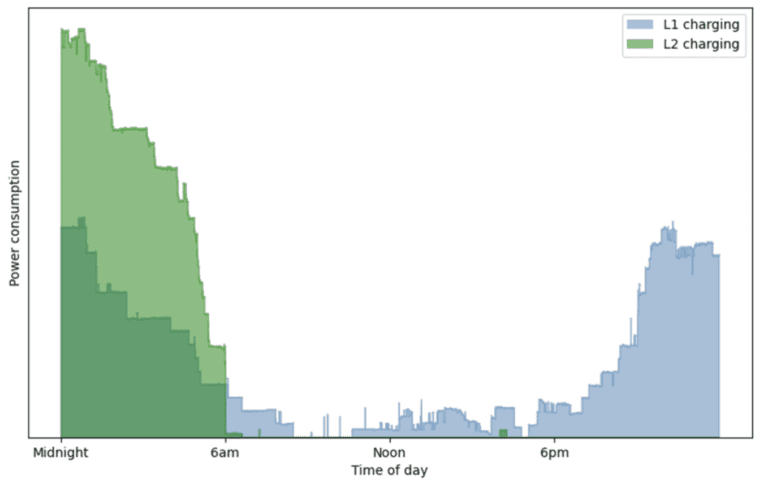
In Sense’s Australian pilot, we’ve achieved a 100% detection rate on EVs in Melbourne. The graph above illustrates the sum of consumption across the day, with L2 chargers in green and L1 chargers in blue, highlighting a clear difference in charging styles.
All EVs on L2 faster chargers turned on instantly at midnight, while manageable now, such sudden switch-ons could cause challenges for the grid, leading to spikes in energy prices. This scenario demonstrates the need for replacing a single static TOU tariff with more flexible TOU and demand response strategies.
L1 slow chargers distribute usage throughout the day. While they consume a similar total amount of power, there is an opportunity to shift this load to support capacity and reduce costs.
Positioning EVs for better reliability
Globally, utilities are exploring solutions to enhance grid resiliency and reliability of supply to customers. In the UK, trials are underway to use EV batteries for home backup power and grid support. In Japan, Nissan’s EVs provide emergency power during disasters. Similar pilots are gaining traction in countries like Australia and the Netherlands.
Pilots show significant potential for harnessing EVs for home backup power (V2H) and grid resiliency (V2G). EV batteries can hold approximately 60 kWh of energy, enough to power a home for a couple of days with conserved use.
Bi-directional charging, when mandated for EVs, ensures power stability for both EV owners and other consumers who could benefit from these “rolling batteries” when the grid becomes constrained.
For these programmes to succeed, customers must feel in control. They want to do the right thing but also need assurance that their EV will have sufficient charge for their next journey. With solutions like Sense, the whole home’s needs and resources can be calculated along with customer preferences, ensuring the right decision is made each time.
In the end, engaged consumers are ready and primed to manage their energy usage, including EV charging.
The post The EV Revolution appeared first on Sense.
]]>The post DRMS and DERMS Instrumental to Utilities Resiliency, Decarbonization appeared first on Sense.
]]>It can be daunting to consider the right solutions to help you achieve all of those goals and more. Implementing demand side management tools, like DRMS and DERMS, can help you wrap your arms around a solution, but also set yourself up for future success as they become a larger and larger part of the grid of the future. However, both lack sufficient behind-the-meter data (BTM) to balance all of the variables future grid operators will need.
What is a DRMS?
Demand Response Management Systems, or DRMS, is a technology platform that helps to enable the communications between electric utilities and demand response providers. Operators use the platform to both monitor and control supply and demand of electricity in real-time at the grid edge.
Utilities and grid operators who operate with a DRMS can enhance grid reliability, reducing both the potential for an outage and the need for expensive, carbon intensive power plants, as well as use energy resources more efficiently.
What is a DERMS, and how is it different?
DRMS are not to be confused with Distributed Energy Resource Management Systems, or DERMS.
The easiest way to understand the difference between DERMS and DRMS is that DERMS also manages distributed energy resources, like wind, solar and microgrids, in addition to demand response loads, like those from smart thermostats and water tanks. DERMS also typically enable the grid operator to directly control device behavior.
Electric utilities face additional challenges because the number of devices is high, and rising all the time, and oftentimes ownership is by a third party. This is where DERMS was made to shine. It bridges the gap between all of the dispersed devices, all of them creating different amounts of energy at different times, combining and presenting them as a simpler, more manageable set of services.
Utilities need DERMS to optimize resources while balancing power across the power grid. It can also help utilities, communities, companies, and other solution providers make existing and incoming devices work for grid flexibility, reliability, resilience, and more.
What are DERMS core capabilities?
As described in a whitepaper by the U.S. Department of Energy Office of Scientific and Technical Information, DERMS can vary in size and scope, but broadly their capabilities are:
Aggregation
DERMS take the services of multiple (potentially millions) individual DERs and present them as a smaller, more manageable, number of aggregated virtual resources that are aligned with the grid configuration.
Translation
Individual DERs may speak different languages, depending on their type and scale. DERMS handle these diverse languages, and present to the upstream calling entity (e.g. a DMS) in a cohesive way.
Simplification
DERMS provide simplified aggregate services that are useful to distribution operations. The services are power-system centric rather than DER-type centric. Complex device-level settings, such as volt-var curve points and fast iterative settings updates are abstracted away as services are achieved and sustained. The simplified services provided by DERMS are standardized supporting the ability of multiple upstream calling entities.
Optimization
A given service to be provided by a DER group may be achieved in many ways. Different smart inverter functions may be best at different locations or times. Different types of DERs (e.g. storage, advanced loads, or solar) may make more sense in one circumstance than in another. DERMS provide requested grid services in the optimal way – saving cost, reducing wear, and optimizing asset value.
Critical Features of a DERMS
DERMS essentially act as a switchboard for all of the distributed energy resources on the grid at any given time. This can include demand response, solar, energy storage, electric vehicles, or other distributed technologies.
The Smart Electric Power Alliance, or SEPA, outlines some of their critical functions as:
- Aggregate – Combining DERs into grid-wide resources to simplify control, monitoring, and management of those systems
- Simplify – Streamlining settings and data
- Automate – Employing algorithms to take actions, often in coordination with a distribution management system (DMS)
- Coordinate – Supply operational information for individual or aggregated DERs assets to the DMS
- Forecast – Provides forecasts of DERs
DERMS can help utilities engage with technology and services, like Sense, that facilitate customer enrollment and help users set up automation, sending signals when those resources are needed. Further, these tools and services can provide insights on DERs/Flexible loads to better plan and orchestrate DERs/DR events.
They can also use DERMS in conjunction with legacy load management systems. Research done by the National Renewable Energy Laboratory in PJM showed that using a DERMS with a legacy load management system was able to achieve better, more efficient results by using the DERMS to inject the required amount of active power needed to maintain demand.
Issues and Challenges
There is no magic wand that we can wave over the grid to solve every single problem, and as great of a solution as DRMS and DERMS are and can be to utilities, they don’t come without their own challenges.
Chief among their limitations is the lack of granular behind-the-meter (BTM) data. Take for example the need for DERs to be organized into groups. To truly maximize the value, an operator would need to know the difference between say an AC that is 2.5kW but runs super efficiently and a 2kW AC that is degrading and runs inefficiently. The cycling load on each of them has a different value and only when you can pinpoint the difference can you group accordingly. Sense’s waveform disaggregation could fill this gap.
It can also be incredibly challenging to manage the immense amounts of data created by a diverse group of DERs. As a result, a shot-gun approach to manage demand is often deployed. DERMS aim to simplify this, but utilities still can’t properly manage demand if they aren’t aware of the end uses, efficiencies, and assets they all map to. Only then can they be surgical in their approach.
There is also the ongoing issue of customer engagement and adoption. Device control is not desired or even possible for everyone yet. Understanding how customers use energy (on which appliances and at what time) can allow utilities to extend demand management to other mediums such as behavioral (see California September 22’) to squeeze out invaluable mW in the total picture. Further, products and solutions, like Sense, can give customers the insights and ability to automate device behaviors based on their needs and preferences, ultimately onboarding more DERs.
The Future Outlook – Get Your Shades!
You can’t throw a rock without hitting a company, utility, state or country with some sort of net zero goal. If you’re interested in seeing specifics on over 2000 registered participants, you can look around the Net Zero Tracker. If you’re looking for a more utility-centric reporting source, the National Public Utilities Council has their 2023 Annual Utility Decarbonization Report available.
Broadly put, DRMS and DERMS can be a huge help to utilities reaching their aggressive decarbonization goals. But applications like Sense, which allow customers to interact and engage with their usage in real time, which also facilitates benefits on the utility side of the meter, may be the real game-changer. This includes enabling new channels for energy efficiency resource procurement, enhancing demand flexibility for demand response programs.
Renewables aren’t going away, and neither are decarbonization goals. This is something Sense thinks about and works on daily. DERMS will continue to be the catalyst that brings utilities and customers together in a way that increases grid reliability and resilience, allows for more DERs to be brought on line, and helps us all achieve our decarbonized, clean energy future.
The post DRMS and DERMS Instrumental to Utilities Resiliency, Decarbonization appeared first on Sense.
]]>The post The UK smart meter rollout is at a technological crunch point appeared first on Sense.
]]>
Michael Jary, Managing Director EMEA and APAC for Sense.
It’s no secret that the UK’s smart meter rollout has been challenging. With the original 2019 deadline passed, the latest figure for smart meter penetration stands at 57%. Recognising that smart meters are integral to the UK’s energy transition, The Energy Act 2023, which became law in October, lays out new powers to deliver the smart meter rollout by 2028. The government claims this could generate total bill savings to households of £5.6 billion.
Heralded as ‘the largest piece of energy legislation in a generation’, it solidifies the government’s commitment to smart metering.
However, October’s House of Commons Committee of Public Accounts outlined a number of issues with the rollout including consumer perception of smart meters and the performance of the technology itself. With legally binding net zero targets to meet, the pressure is on to smooth the rollout’s stumbling blocks.
The rollout is progressing slowly because consumers are sceptical of the benefits and energy savings have been marginal. This is connected to issues with the technology itself. With a foundation of solid technology, issues with consumer confidence and engagement can be addressed and the true benefits of smart metering realised.
Future-proofing smart meter technology for real-time impact
In 2011, when the UK began its smart meter rollout, households were fitted with first-generation SMETS1 smart meters. However, these lower-spec meters and their successor, SMETS2, have not met original expectations. As identified in the Committee of Public Accounts report, around 3 million of the smart meters installed so far are not functioning properly. And, when 2G and 3G communications networks are closed another approx. 7 million will lose functionality.
As a result, the Accounts Committee recommends measures to ensure that suppliers use future-proofed technology. However, as suppliers and manufacturers work on the next generation of smart meters, what does that future-proofed smart meter technology look like?
Crucially, the next generation of smart meters must deliver tangible benefits to users. The first wave of meters failed to deliver on their promise, mainly because smart meters were not very smart. They were limited by the technologies available at the time. As a result, many consumers remain sceptical about the direct benefits of smart meters, as the potential cost savings and energy efficiency gains have not been realised.
Successful smart meter adoption relies on actively engaging consumers and encouraging their interaction with the data and insights the meters provide. For example, lower-spec traditional meters lack the real-time, detailed experience necessary to effectively impact household energy consumption.
Previous generation smart meters rely on 15-minute interval data, which can be delayed up to 24 hours before consumers access it. In-home devices can provide real-time consumption but without detailed, real-time insights into second-by-second appliance usage, smart meters can’t provide the information needed to reduce energy use.
Unsurprisingly, energy providers have struggled to engage consumers using existing smart meters because the benefits are not clear enough to them. Moreover, with the increasing use of smart devices like electric vehicles, heat pumps, and solar panels it is now even more vital to deliver true, smart insights, in real-time.
This is where next-gen, AI-enabled smart meters are essential. Unlike traditional smart meters that were constrained by the technology of their time, now advanced AI and machine learning can integrate with smart meters to offer Real-Time Load Disaggregation (RTLD). This advanced AI technology analyses energy consumption at up to one million samples per second. It can identify which household appliances are on or off in real-time, monitoring the entire home and individual appliances.
This true real-time monitoring not only benefits the consumer but also provides valuable insights and tools for energy operators and retailers. For example, suppliers can manage demand effectively by leveraging real-time intelligence at the grid edge. Such insight is essential for energy flexibility initiatives such as Demand Response (DR) programmes.
Correctly specifying smart meters is integral to energy flexibility
As the UK strives to achieve net zero emissions, effective domestic demand response (DR) is essential. The role of DR in the UK’s energy flexibility strategy has never been more crucial. Energy suppliers and grid operators who can manage peak consumption will reduce costs and reward consumers.
National Grid ESO, Octopus, and British Gas have all engaged in smaller-scale demand response programmes, proving popular with engaged consumers. However, encouraging sustained and active participation with a larger spread of consumers can only be achieved if it is easy; the customer experience must be seamless and the benefits, tangible.
At the recent Energy UK annual conference, DR was a key topic, with discussion on the need to get customers more engaged in how we shift energy use in a way that shows them the value of doing so. This is especially relevant for younger and lower-income groups, where digitisation and the opening up of data is seen as central to engaging people in the energy transition.
Successful Demand Response programmes actively engage consumers. They provide support as well as incentives. In fact, done well they provide added value, solidifying the relationship between consumer and retailer.
For DR programmes to be successful, they must be cost-efficient, scalable, and effective. It works where providers and households are in real-time communication and where consumers have access to real-time, actionable insights on electricity use. This is why real-time load disaggregation (RTLD) and grid edge intelligence is so important to the future of the energy transition.
For example, a household using a next-generation smart meter equipped with this technology can receive a notification via an app to shift the use of their washing machine or dryer to a different time when energy prices are lower or the grid is less congested. The notification is based on what appliances they have running at that exact moment. Without this capability, when homes are asked to shift load, an average of just 2-4% of peak consumption is typical. In contrast, in homes equipped with these AI technologies, this soars to 18%. They are given suggestions on the precise appliances they should consider turning down, removing any guesswork.
When DR programmes are delivered with this personalised approach consumers become engaged and empowered. With specific appliance level guidance, consumers are more likely to participate in a demand response event and because they turn off the right energy-intensive appliances, they contribute more load too. Too many consumers become disillusioned with demand response events because they have turned off their low-energy lights or computer consoles, disrupted their lives, and are then disappointed to see how little load they have shifted. It is vitally important for the UK that demand response events don’t lose consumer trust.
The AI-led approach to demand response is much lower cost and therefore more scalable than other asset-heavy approaches. Because the marginal cost of software is so much lower, it is approx. 60 times more cost-effective than home batteries. It can be practically rolled out to millions of homes, allowing far more load under control. In this way, smart meters become integral to household energy experiences and energy retailers become trusted partners, providing added value through personalised advice.
It’s time the UK leads the charge
When appropriately specified, AI-ready smart meters have the potential to achieve myriad benefits – from lower bills, reduced energy consumption, and grid optimisation. In North America, AI-ready next-gen smart meters are being specified, with five million scheduled to be rolled out to households in the near future as a starting point.
Energy retailers are hungry for innovation, consumers are desperate for tangible results. The UK must meet its net zero obligations and our energy system must transform. Correctly specifying next-generation grid-edge technologies is foundational to these challenges. With the latest UK legislation refocusing efforts on smart metering, it’s time the UK leads the charge in designing and delivering truly future-proofed smart meter technologies.
The post The UK smart meter rollout is at a technological crunch point appeared first on Sense.
]]>